The Extra Words
Some things look straightforward until you examine the structure underneath. These articles are the result of that examination; explorations at the intersection of technology, marketing, human behaviour, business strategy, and the patterns that connect them.
Analytical in approach. Lateral in perspective. Written for people who don't mind diving a little deeper.

When was the last time you actually read an End User License Agreement? Start to finish? Not skimmed, not scrolled past to the "I agree" button, but read it in its entirety?
Almost nobody has. And yet, we'll happily pay for a cinema ticket to watch someone do exactly that kind of unglamorous, unrewarded checking; Erin Brockovich with water district records, Hidden Figures with the numbers nobody double-checked. True stories presented as a tale of heroism.
But we just won’t do it ourselves, on a busy Tuesday, an hour before lunch, with that EULA popping up.
This is a piece about those who are the custodians of the nitty-gritty, and the impact if they’d failed: the compression library nobody had heard of that nearly compromised half the internet and the eleven lines of code that broke thousands of software projects when they suddenly became unavailable.
It’s about the handful of people (an engineer, a friend of mine, a whistleblower) who couldn't bring themselves to ignore what was in front of them. And the many that do on an almost daily basis.

A recruiter I don't know personally posted on LinkedIn that she was done with bullshit lingo in HR; the fluent, empty language AI has poured into the hiring process, and reads like a bot-to-bot conversation. It sparked my interest.
I wrote her, genuinely curious what she'd advise someone like myself, who doesn't fit a headline easily. Her answer was generous and sincere, and it was also exactly the mechanism she'd just named as the problem: pick your audience, cut what doesn't fit, narrow yourself fresh for every role. I understood it as template work where AI comes in handy.
Out of curiosity I read further into her public timeline, then found two job postings from her own company from that same week. The same pattern kept turning up: templated HR job postings without personality. One asked for a system and described the daily work of an entirely different one. The other wasn't a real job at all, just an open funnel disguised as vacancy.
None of this turns out to be a single recruiter's habit but a common practice, and research backs that up. What's actually keeping capable people from getting hired isn't the use of AI; it's a matching process that wasn't really looking for a fit, but one that sorts and selects CV's without considering the person who's applying.
This piece is about bullshit lingo, AI in HR, and unmatched needs.
Here’s my view on trusting AI-Assistance and AI-Detection. Both have their place, and both may lead you to believe something that’s not a reality. No matter where you stand in the AI debate, having an opinion about it also means having thought through that position. Because if you haven’t, you may be at risk of handing agency and authority over to a tool you do not have any control over.
This week, more out of curiosity than concern, I ran three of my own articles through an AI detector. What came back tracked almost nothing about what I'd actually said, and almost everything about how tightly it was built. A well-argued paragraph and a generated one can look identical to a tool that only reads structure, not meaning. That's not a reason to dismiss the concern behind these tools. It's a reason to ask what, exactly, you're trusting when you let one decide for you.
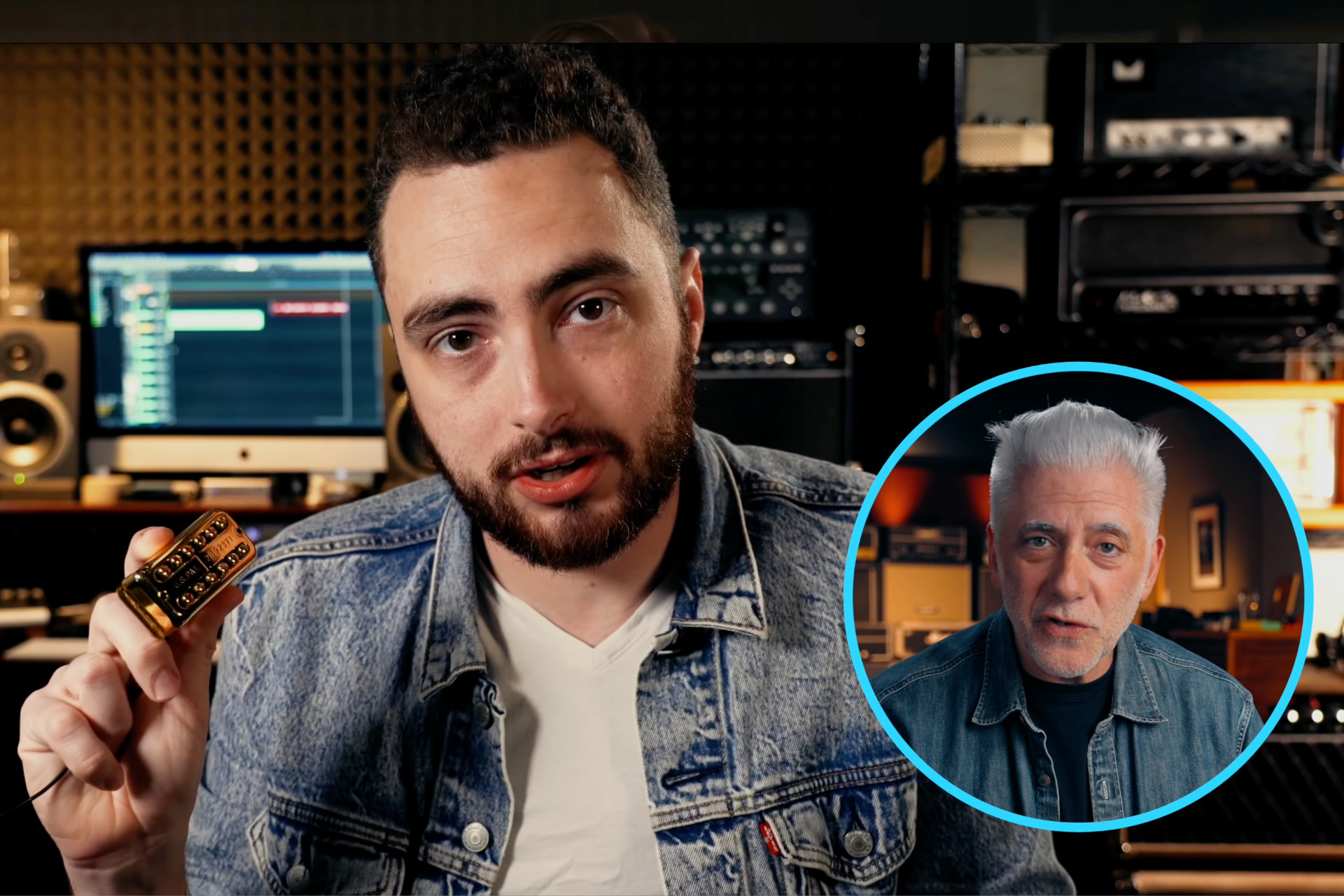
When “Everything Music” creator Rick Beato posted a video about AI-based impersonation accounts, with bots flooding the metrics of engagement, and original creators losing ground to fake slop, I recognised a similarity in the patterns behind the different platforms.
Different industries, different decades, the same mechanism underneath: somewhere along the way, we’ve allowed an anonymous number to take over a personal relationship. We’ve accepted that bulk has replaced quality, and decisions are being made not on the basis of actual human feedback but on the numbers that a platform churns out.
"From Corporate back to Cooperate" follows that pattern through Citroën, Amazon, and a secondhand-clothing market, and asks what we're actually optimising for when we seem to forget the value of what we present to a customer base. Alongside McDonaldisation and the Walmart Effect, I am adding Sheinification as a term to describe how flooding a market with volume cheap enough to be disposable leaves nobody responsible for where any of it ends up.
When a well-known fintech founder posts a feel-good message on LinkedIn, and that message is about helping the underdog fight the old guard, the initial response might range from "What a nice guy, see, you can be rich and still care", to "This is how it's done, this is how change will happen".
A 16-year-old needed a business bank account, but the bank said they couldn't help him. When the teenager sent a WhatsApp message to the fintech founder, he got an instant yes, and within days had the means to do business. It's the story of a caring disruptor against an uncaring system.
Except, the rule he'd run into already had an answer, years before he asked, and the post never mentioned it.
This isn't really about one bank, one founder, or one teenager. It's about how easily a single sympathetic exception gets mistaken for evidence about a whole system, and where the line blurs between a rebel and a ruse.
A friend in the United States watched people he had known for years go somewhere he couldn't follow. We spoke about a growing ideological gap. Family members, old friends; the shared history was still there, but the distance kept growing. He asked me: "How do we reach those people? Is there anything left to reach?"
My instinctive answer surprised him. I told him to treat it the way you'd treat someone in the grip of an addiction. Don't attack the substance. Don't ridicule the user. Stay present without being complicit. Keep the door open, even when no one is walking through it.
After a second of thought, he said: “You know what, that might exactly be it”.
But then I thought about it a little longer. Because if the same approach that works for addiction applies to ideological capture, the analogy isn't just a rhetorical device. It might be structurally true. And if it's structurally true at the level of a person, does the same mechanism operate when the entity drifting isn't an individual, but a company? An institution? A state?
That's the question I try to answer in this article.

On one of my social media timelines, someone recently shared an interview fragment claiming “happiness is your quality of life minus envy”. Simple. Brutal. And yet, it’s more complicated than that. The real issue? We’re all playing by a leaderboard we never agreed to.
A few years back, I swapped my station wagon for a smaller car: better mileage, more comfort, less cost. By any rational measure, an upgrade. The response? A "hmmm", followed by a slow look toward the parking lot. That "hmmm" is the sound of a system measuring us by the wrong metrics.
From the Harvard Study of Adult Development to Blue Zones and palliative care research, the evidence points in the same direction: what truly matters (relationships, purpose, community) rarely shows up on the leaderboard we’re handed.
So what does it cost to keep playing by the wrong ones?
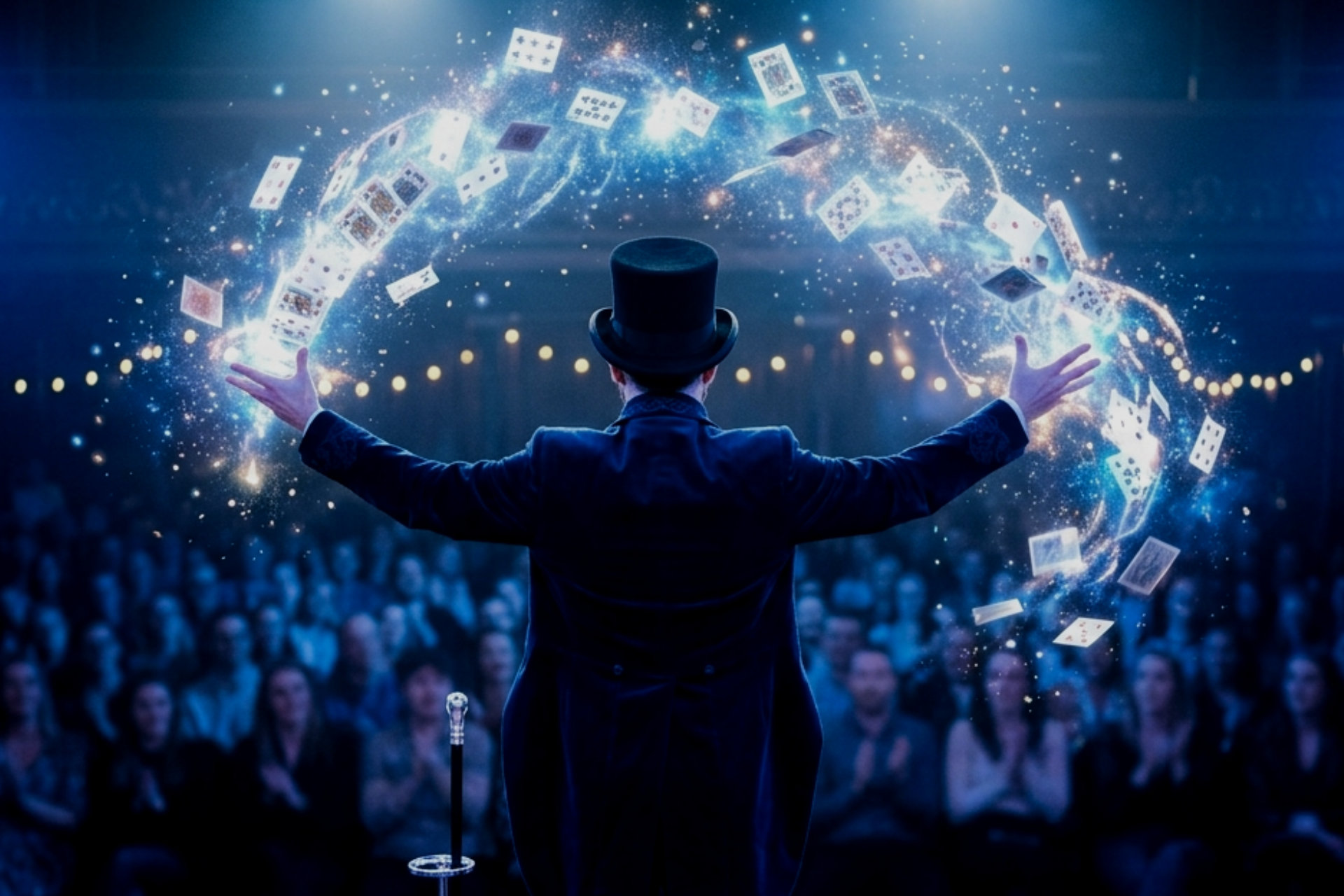
Every magician knows the trick works because the audience watches the hands.
We apply the same tricks in marketing and PR. And we do the same with global politics. We follow the wars, the summits, the sanctions, the soundbites. And while we do, something else is happening: a slower, more consequential game played in the structural layer underneath. A patient contest over who depends on whom, and what that dependence is worth when the moment to use it arrives.
It started with a small detail buried in the news. A peace deal between Armenia and Azerbaijan, brokered in Washington. The headlines celebrated the handshake. What they did not cover was the clause establishing TRIPP: a 99-year transit corridor through the South Caucasus, managed by a US-controlled company. Not a road; a dependency relationship made physical.
The grammar behind TRIPP is the same grammar behind Starlink's role in Ukraine, Monsanto's grip on global seed supply, and Adobe's switch to subscription licensing. Different domains, different decades, different actors. The same sequence, every time.
Once you see it, you cannot unsee it. And you will find it everywhere if you care to look.

The first two articles in this series established a case: the brain is organised in layers, different neurotypes represent different configurations of those layers, and the frameworks we use to assess human cognition were built around a standard observer that describes few actual people. The cost is not only misread individuals; it is a systematically incomplete picture of human cognitive possibility.
This article draws out the research implications. Not conclusions, but orientations: the questions that become visible once you stop treating the standard observer as a ground truth, and start treating it as one configuration among many.
Those questions include: what does each neural configuration produce when it works with its architecture rather than against it? Where does perception end and interpretation begin, and does that boundary differ between neurotypes? What can music-based research reveal about cognitive encoding that standard testing cannot reach? What would neuroplasticity look like if the goal were calibration rather than correction?
We have decades of rigorous research into what non-standard configurations struggle to do in standard-observer environments. The complementary body of research, into what those configurations can do in environments designed for their calibration, does not yet exist. This article makes the case that building it is not an act of accommodation. It is an act of scientific curiosity.

In colorimetry, the Standard Observer is a mathematical model of the average human visual system; it’s a useful fiction that enables reproducible color measurement across industries. It describes almost no actual human being. Every real observer deviates from it: in cone cell distribution, in predictive model calibration, in the linguistic categories their culture uses to carve up color space.
This article extends that insight from color science to cognitive science, and makes the case that the standard observer running through psychology, education, and workplace design carries the same structural limitation. With significantly higher costs.
Drawing on neuroimaging research into autism, ADHD, dyslexia, and synesthesia, the article examines what those neurotypes actually look like at the level of brain architecture. Not as variations of deficit, but as structurally distinct configurations of the processing stack established in the first article; each producing characteristic difficulties and characteristic strengths from the same source, inseparably.
The argument is not that existing frameworks are wrong. It is that they were built to detect one type of signal, and are systematically blind to others. The patterns they read as absence are frequently the presence of something the instrument was never calibrated to see. Understanding that distinction is not just a practical matter. It is an epistemic one.

The brain does not wait for your awareness before making decisions. By the time any perception reaches consciousness, it has already passed through multiple layers of processing, each transforming the signal in ways we are totally unaware of. What you experience as seeing, hearing, or navigating is not raw input; it is the brain's construction of raw input, shaped by an architecture most people never examine.
This article builds the scientific foundation for the series. Drawing on Nancy Kanwisher's research into brain specialisation, Karl Friston's predictive processing framework, and evidence ranging from color perception to musical memory, it maps the brain's layered organisation: dedicated hardware regions for specific functions, broad distributed networks for higher-order cognition, and a predictive operating system running continuously beneath awareness.
The central argument is: perception is not reception. It is construction. And the architecture doing the constructing varies between individuals, between neurotypes, between brains whose processing stacks are configured differently at different layers. Understanding that architecture is the prerequisite for everything that follows in this series.
If you have ever suspected that the way you perceive the world does not quite match how others describe theirs, this article offers a structural explanation for why that is not only possible, but expected.

We need pro-inclusivity.
Not as a rebranding of anti-discrimination, but as a genuinely different question: not what do we want to stop, but what condition do we want to create, and how?
Because we seem to be losing touch. Not dramatically, not all at once, but steadily, in the way that parallel lives quietly become the norm. Different communities, different rhythms, different worlds; sharing a city without really sharing anything in it.
I was at a presentation at city hall recently, commissioned by the municipality to address exactly this. The research was careful, the intent was right, the alderman behind it clearly believes in making a difference. And yet the frame it reached for was the obvious one: discrimination as the problem, defined communities as the lens, policy as the answer.
And I understand why. It is the most visible starting point. I am not dismissing it, but I think it misses something fundamental about how inclusion actually works, where it comes from, and who it needs to reach.
I am sharing my perspective on that. On the paradox built into how we define the problem. On the people for whom no chair was arranged. And on what it actually takes to design a city where the encounter that hasn't happened yet becomes a little more likely.
We don't need to be best friends. We need to be good neighbours.
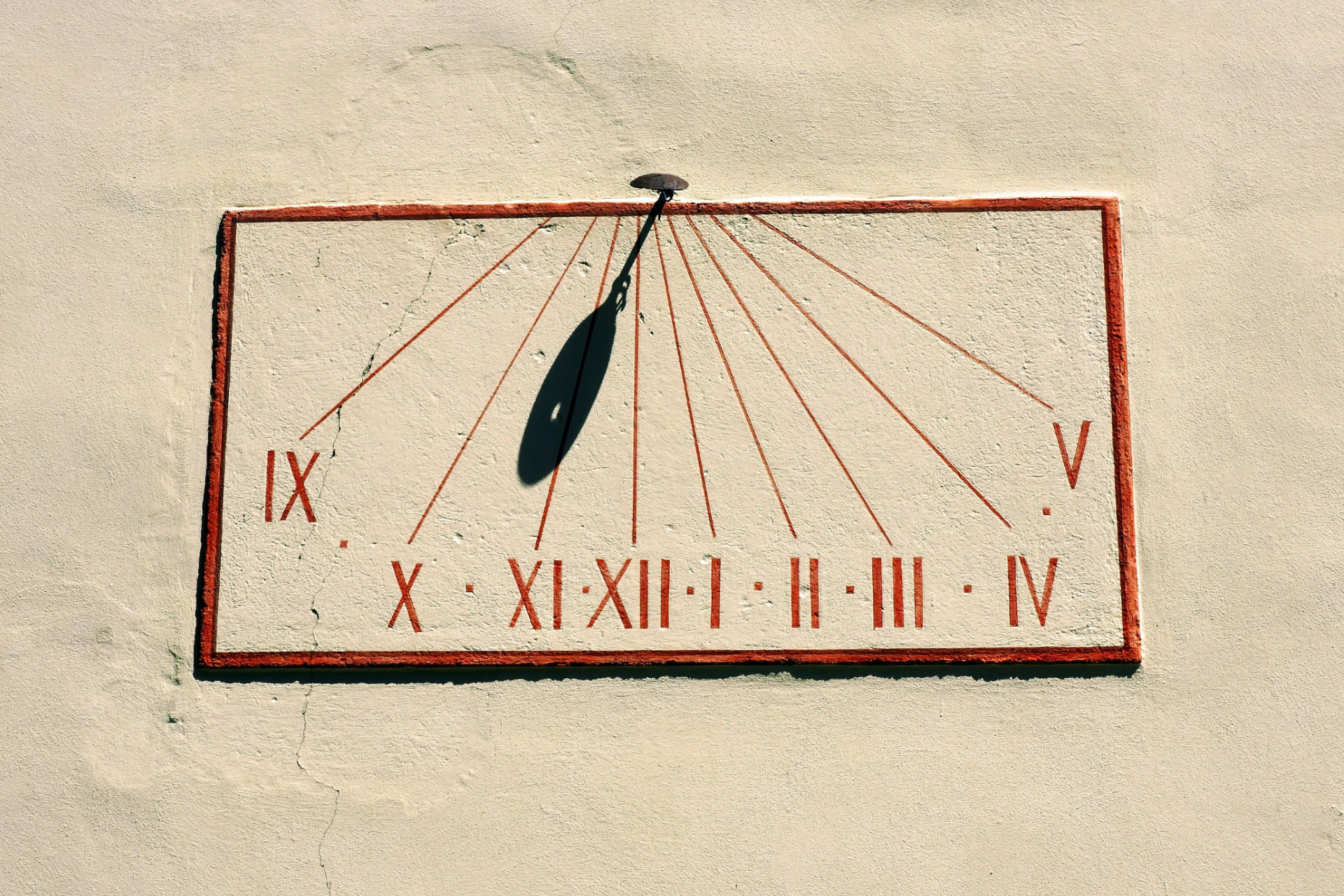
As of today, the clock tells me when it's time to go to bed, but my melatonin disagrees.
This happens every year. The clocks go forward, the "morning mafia" celebrates their extra hour of evening light, and roughly a quarter of the population stoically absorbs another week of biological jet lag they never booked and cannot return.
I'm a night owl. I wake at 09:00 without an alarm. My brain peaks late. And every spring, Daylight Saving Time quietly invoices me for a biological debt I never agreed to take on.
But this isn't just about me, or the 25% of the population whose chronotype doesn't fit the morning mold. It's about a system designed around a fictional average human, dressed up as common sense, and defended by people who've never had to fight their own biology just to make an 08:00 meeting.
The deeper argument is about a society still running on an industrial-age clock in a post-industrial world, and what it would actually take to fix that.
Let's stop pretending it's a minor inconvenience. Let’s stop the absurdity.
What happens when public perception is different from internal reality?
Most organisations don't suffer from a lack of intelligence, ambition, or expertise. They suffer from something far more ordinary: they stop seeing themselves as the outside world sees them. Not because they don't care, nor because they're incompetent. But because they've spent so much time inside their own story that the internal version quietly replaces the external one. And once that happens, even the most capable managers start making decisions based on a reality that only exists within their own bubble.
I've seen this pattern more than I thought possible: across industries, across organisations, and affecting managers that are genuinely good at what they do. The gap between internal reality and public perception is almost always larger than expected. And almost always, it's the last thing anyone inside the organisation can see clearly.
In this article, I explore how that gap forms, why it's so hard to close from the inside, and how you can tackle it by using the Perception Information Model.

I've been thinking about Malcolm Gladwell's Outliers and the concept of "capitalization rate" — what percentage of natural ability actually gets developed and used. Gladwell focused on poverty, geography, and timing. But there's another massive filter he only brushed against: cognitive conformity.
We've built institutions around a narrow band of neurotypical processing, then act surprised when they produce mediocre results. We focus on the outliers and try to reverse-engineer their success. It's compelling to believe opportunity follows a "success recipe”.
Meanwhile, we're missing a cornerstone factor that flips the narrative entirely: roughly 20% of the population represents unseen talent that never qualifies for the opportunity.
When 20% consistently struggles in your system, the system is sending a message.
Yet our response is predictable: we medicalize it. CBT for workplace anxiety. Medication for focus. Social skills training to "fit in."
We've made it cheaper to pathologize 20% of humans than to redesign 100% of our institutions.

If 15–20% of the population are neurodivergent, we’re not talking about exceptions; we’re talking about a substantial part of the human norm. Yet our systems still treat this fifth of humanity as “defective” or “atypical.”
This article explores the paradox: rising recognition of ADHD, autism, dyslexia, Tourette’s, and other forms of cognitive variation, alongside persistent skepticism and stereotypes. It argues that prevalence hasn’t changed, only our ability to see what was always there.
From packed lecture halls in Eindhoven to workplace reports across Europe, the evidence points to a systemic gap: we lack the infrastructure to support and leverage cognitive diversity at scale.
The piece calls for a Cognitive Diversity Enablement Hub — a practical, evidence‑based resource that moves beyond fragmented initiatives and begins designing systems for the 20%, not against them.