The Extra Words
Some things look straightforward until you examine the structure underneath. These articles are the result of that examination; explorations at the intersection of technology, marketing, human behaviour, business strategy, and the patterns that connect them.
Analytical in approach. Lateral in perspective. Written for people who don't mind diving a little deeper.

The first two articles in this series established a case: the brain is organised in layers, different neurotypes represent different configurations of those layers, and the frameworks we use to assess human cognition were built around a standard observer that describes few actual people. The cost is not only misread individuals; it is a systematically incomplete picture of human cognitive possibility.
This article draws out the research implications. Not conclusions, but orientations: the questions that become visible once you stop treating the standard observer as a ground truth, and start treating it as one configuration among many.
Those questions include: what does each neural configuration produce when it works with its architecture rather than against it? Where does perception end and interpretation begin, and does that boundary differ between neurotypes? What can music-based research reveal about cognitive encoding that standard testing cannot reach? What would neuroplasticity look like if the goal were calibration rather than correction?
We have decades of rigorous research into what non-standard configurations struggle to do in standard-observer environments. The complementary body of research, into what those configurations can do in environments designed for their calibration, does not yet exist. This article makes the case that building it is not an act of accommodation. It is an act of scientific curiosity.

In colorimetry, the Standard Observer is a mathematical model of the average human visual system; it’s a useful fiction that enables reproducible color measurement across industries. It describes almost no actual human being. Every real observer deviates from it: in cone cell distribution, in predictive model calibration, in the linguistic categories their culture uses to carve up color space.
This article extends that insight from color science to cognitive science, and makes the case that the standard observer running through psychology, education, and workplace design carries the same structural limitation. With significantly higher costs.
Drawing on neuroimaging research into autism, ADHD, dyslexia, and synesthesia, the article examines what those neurotypes actually look like at the level of brain architecture. Not as variations of deficit, but as structurally distinct configurations of the processing stack established in the first article; each producing characteristic difficulties and characteristic strengths from the same source, inseparably.
The argument is not that existing frameworks are wrong. It is that they were built to detect one type of signal, and are systematically blind to others. The patterns they read as absence are frequently the presence of something the instrument was never calibrated to see. Understanding that distinction is not just a practical matter. It is an epistemic one.

The brain does not wait for your awareness before making decisions. By the time any perception reaches consciousness, it has already passed through multiple layers of processing, each transforming the signal in ways we are totally unaware of. What you experience as seeing, hearing, or navigating is not raw input; it is the brain's construction of raw input, shaped by an architecture most people never examine.
This article builds the scientific foundation for the series. Drawing on Nancy Kanwisher's research into brain specialisation, Karl Friston's predictive processing framework, and evidence ranging from color perception to musical memory, it maps the brain's layered organisation: dedicated hardware regions for specific functions, broad distributed networks for higher-order cognition, and a predictive operating system running continuously beneath awareness.
The central argument is: perception is not reception. It is construction. And the architecture doing the constructing varies between individuals, between neurotypes, between brains whose processing stacks are configured differently at different layers. Understanding that architecture is the prerequisite for everything that follows in this series.
If you have ever suspected that the way you perceive the world does not quite match how others describe theirs, this article offers a structural explanation for why that is not only possible, but expected.

If 15–20% of the population are neurodivergent, we’re not talking about exceptions; we’re talking about a substantial part of the human norm. Yet our systems still treat this fifth of humanity as “defective” or “atypical.”
This article explores the paradox: rising recognition of ADHD, autism, dyslexia, Tourette’s, and other forms of cognitive variation, alongside persistent skepticism and stereotypes. It argues that prevalence hasn’t changed, only our ability to see what was always there.
From packed lecture halls in Eindhoven to workplace reports across Europe, the evidence points to a systemic gap: we lack the infrastructure to support and leverage cognitive diversity at scale.
The piece calls for a Cognitive Diversity Enablement Hub — a practical, evidence‑based resource that moves beyond fragmented initiatives and begins designing systems for the 20%, not against them.

Some people are driven by goals. Others by questions.
Most business frameworks only recognise the first group.
What happens when our systems misread motivation?
What if the person who keeps asking why is motivated differently?
We’ve learned to detect goal-driven energy: needs, emotions, actions. But there’s another level we rarely register: curiosity without a goal, exploration without urgency. So, it seems, our motivational models may be precise but incomplete. This is what “The Lateral Motive” explores: why our frameworks miss half the story, and what becomes visible when we start paving the desire paths people actually walk.

Neuroscience has shown that our memories do not stand alone like neatly stacked files. Instead, they cluster into constellations. Similar experiences fuse into unified sentiments. That is why a single song can bring back not just one afternoon, but a whole season of life.
This is especially powerful in what researchers, such as cognitive psychologist David Rubin, call the ‘Reminiscence Bump’; the period in our teens and early twenties (roughly 10 to 25) when experiences are most vividly etched into memory. During this time, our brains are particularly adept at forming lasting memories, which is why the music we listen to during these years often has a profound impact on us later in life.

“So… what is it that you do?”
A simple question. Until it isn’t.
For those of us whose work doesn’t fit neatly into categories, answering it can become surprisingly complicated.
In this article, I explore the paradox of roles that resist tidy titles. I share two deceptively simple questions I often ask to uncover deeper purpose, and reflect on the Japanese concept of Ikigai; a compass for aligning passion, skill, contribution, and value.
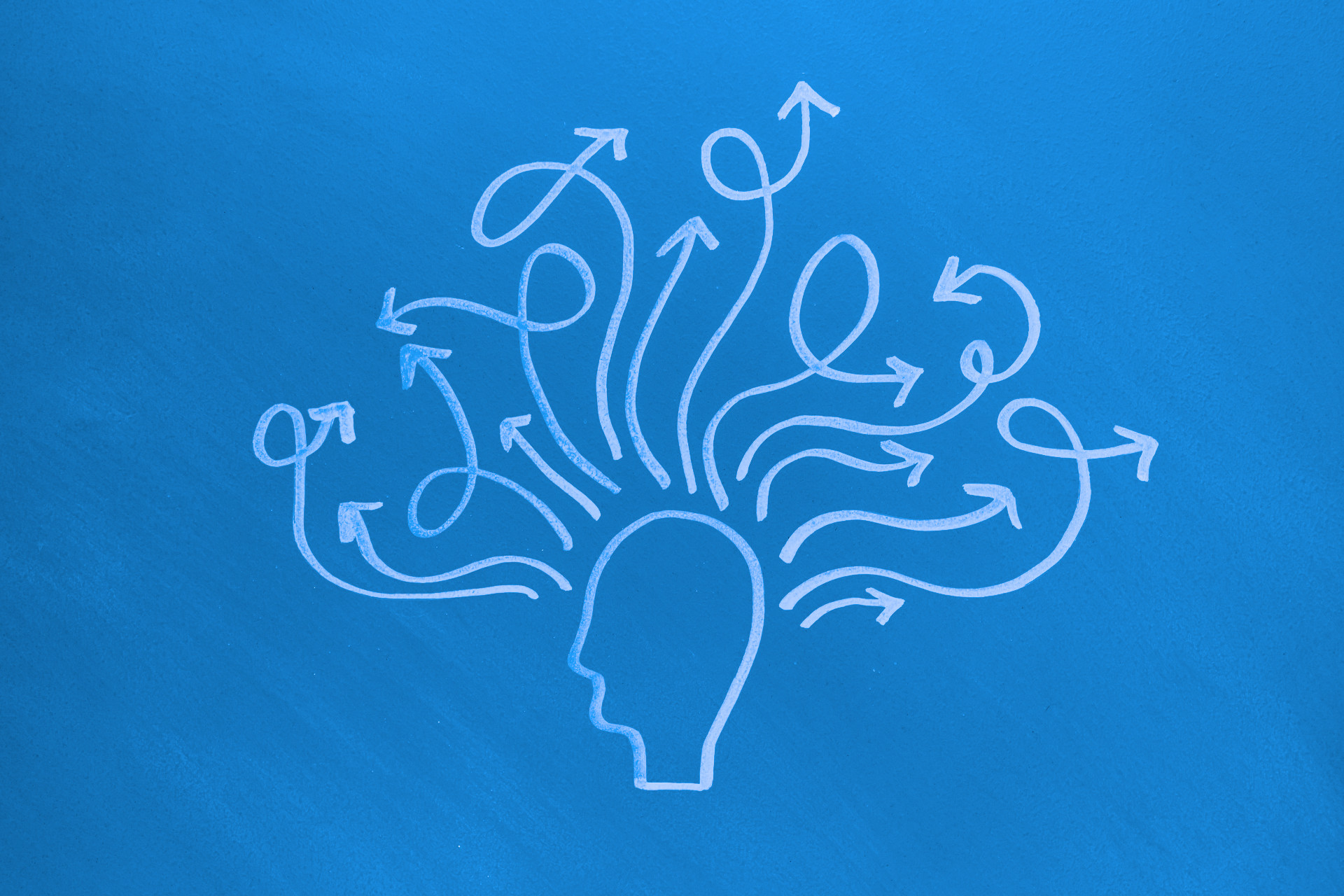
Ever felt like your mind is spinning at full speed, while your work is stuck in first gear? You're not lazy. You're likely underused. And you’re not alone. There’s a lot of talk about burnout. But what about bore-out? The slow, silent drain of creativity and energy that happens when bright minds are left unstretched, unseen, or miscast in traditional roles? It’s more common than you think, and it’s time we address it.

What if the key to unlocking unprecedented innovation lies not in artificial intelligence alone, but in its synergy with the naturally creative neurodivergent mind? As organizations worldwide rush to implement AI solutions, a remarkable opportunity emerges at the intersection of technology and human cognitive diversity. Yet, how can we harness this potential without inadvertently suppressing the very creativity we seek to amplify?