
There was a presentation at city hall recently. A research bureau, specialized in discrimination issues, had been commissioned by the city to explore inclusion and the impact of discrimination across communities, under the title “Patterns, Perceptions, and Differences Between Communities”. They had spent considerable time interviewing thousands of residents, ultimately focusing on five distinct ethnic and religious communities. The alderman who commissioned the work clearly believed in it. The researchers had done their job carefully and honestly. On stage, alongside the alderman and two project leads, sat five community representatives, and the findings they brought were real, specific, and recognizable.
It was, by any reasonable measure, a praiseworthy initiative. The cited goal to make the city a more inclusive place to live in is admirable.
And yet, while sitting there and listening to the presentation, something about it felt incomplete. Not wrong, not dishonest, but somehow it was heading toward a conclusion that couldn’t quite reach what it was aiming for. The person next to me noticed it at the same moment I did. We looked at each other briefly, without saying anything, because the observation didn’t need words yet. It would need them later.
The question that kept forming, in the back of my mind, was not whether the research was good. It was whether the framing of the context was correct.
Anti-discrimination.
The word that shapes the room
Words matter. Someone said that at the presentation, almost in passing, and they were right. But if words matter, then we should look carefully at the words we keep reaching for.
Anti-discrimination is about what we don’t want. It focuses every policy, every conversation, every measurement toward the pain rather than toward the relief we’re trying to create. A city organized around anti-discrimination is a city permanently in conversation with its own failures. And, although necessary, it is not sufficient. It may, ultimately and quietly, prove to be part of the problem.
Pro-inclusivity is about what we do want. It sounds like a simple reframe, or a branding exercise; the kind of thing a communications department does before lunch, but it isn’t. The moment you commit to the “pro” formulation, you have to answer a harder question: pro what, exactly? What does the condition you’re working toward actually look like? How do you know when you’re getting closer?
Anti-discrimination has metrics. Percentages of residents feeling discriminated against, broken down by group and domain. Pro-inclusivity doesn’t have metrics yet, because we haven’t fully defined what it is. That discomfort is productive. It means we’re finally asking the right question.
The paradox inside the ask
Here is where it gets complicated, and where it’s worth embracing the discomfort rather than moving past it quickly.
The communities represented in the research each identified themselves as a group in order to describe their experience. That is a rational and humanly understandable thing to do. Shared experience creates solidarity; solidarity creates a vocabulary; vocabulary makes it possible to speak to power.
But the mechanism of group consolidation is structurally similar to the mechanism of exclusion. Both draw a boundary. Both say: these people share something that those people don’t. The group forms to protect itself from being singled out, and in doing so, singles itself out. The municipality then responds by designing policy for the label. The representative speaks; the policy addresses the group. But the individuals inside that group may be contradictory, messy, and may not recognise themselves in what their representative describes as a common truth.
This is not a criticism of anyone in that room, taking part in the presentation, occupying a chair. It is a description of a trap that nobody designed and that everyone is caught in. Because there are also people for whom no chair was arranged at all.

A person in a wheelchair sat beside the rows of chairs set out for the audience, literally outside the group gathered to discuss equality and inclusion. They said so during the session, in a tone that was more tired than angry. It was, in miniature, the whole problem: a conversation about inclusion that hadn’t noticed who was sitting outside it. Nobody had intended that. The chairs had simply been arranged, as chairs usually are, for the people who were expected. The same logic that produced the five research communities, sensible, well-intentioned, and organized around the most visible forms of exclusion, also produced the arrangement of those chairs. Neurodivergent individuals weren’t on stage either. Nor were people excluded by age, or by the simple fact of not speaking English in a city that increasingly assumes you do.
The frame was not wrong. It was just narrower than the problem.
Geography matters, and so does history
A few evenings after the presentation, I sat with friends and the conversation turned to the same subject. One friend is Dutch, the other from a West African country; one comes from a Christian tradition, the other from Islam. Different languages, different cultures, different educational backgrounds, different conceptions of family and community. And yet, entirely at home with each other, while simultaneously navigating two worlds that don’t always know what to do with them.
I made the case, as I usually do, for active exchange as the foundation of social cohesion. Food shared across a table, conversations that begin with curiosity rather than assumption, and the deliberate seeking of contact across differences. “It works”, I said: “We do it, it’s possible”.
The counterpoint was patient and precise: “Yes, here. Because your society is structured to absorb it. But where I come from, the opposite dynamic is happening. The organic community cohesion that once existed, built across generations through extended families and shared land and tribal belonging, is unravelling. Your approach might build something here. It would not repair what is being lost there.”
That exchange did something to the argument I’d been building. It showed that there is no universal playbook. The conditions that make uninstructed encounter possible — mixed urban texture, shared public space, functional proximity between people who didn’t choose each other — are not guaranteed. In some contexts they have to be designed in. In others, what already existed needs being designed away. The same intervention, transplanted without understanding the environment, produces nothing, or worse.
This is the urgency that the presentation in city hall didn’t quite reach. Left to its own devices, the tendency of any city is not toward encounter. It is toward the comfort of the familiar, the sealed-off community, the parallel world that never quite touches the one next door. Not through malice, but through comfort, through digital life, through the entirely natural human tendency to seek the people who already understand you.

The usual suspects, and the one who isn’t
There is a specific figure who keeps getting left out of this conversation, and their absence is instructive.
I was at a book presentation recently, where the author, openly gay, had written about a forbidden love between two young men, one of whom trapped in a religious life. The interviewer, a woman who had recently converted to Judaism, said something clearly meant as a bridge: “Since I became part of this community, I instantly understood belonging and exclusion. I instantly understood discrimination.” It was a generous impulse. She was reaching for shared grounds and I felt the openness and honesty, and I understood what she was saying.
But I found myself writing an email to the author afterward, pointing to a piece I had published some time earlier, about a different kind of singling out. Not the singling out of a recognized minority, but the quieter, more disorienting experience of being excluded while appearing to belong to the majority. The person who looks normative by every visible marker, who has no bureau to call, no parade, no dedicated awareness month, and yet experiences a version of exclusion that is no less real for being unnamed.
The interviewer’s insight was genuine and moving. It was also, without her noticing, a gentle closing of a door. It implied that to understand exclusion you need to have crossed into a recognized minority, that belonging to a named group with shared suffering is the entry point to the conversation. Which means everyone who doesn’t qualify for that entry point remains outside it.
The research report contained a certain confirmation of this. Among the Dutch-Dutch community, 13% reported experiencing discrimination, primarily on the basis of age, gender, and sexual orientation. A further observation noted that residents who don’t speak English increasingly feel less naturally part of a city that is internationalizing around them. The report acknowledged this, described it as useful context for understanding broader tensions, and moved on. A majority group experiencing a form of exclusion that has no representative, no dedicated finding, and no seat on stage.
This figure is not a hypothetical. They are a proof.
If exclusion can happen to someone who looks like they belong, then exclusion is not a property of identity. It is a social mechanism, one that operates wherever a group sets and defends its own boundaries, regardless of which group that is. The “usual suspects” framing, the assumption that discrimination belongs to specific identities, doesn’t just miss part of the picture. It mislocates the problem entirely.
The root is not homophobia, or antisemitism, or racism, though those are real and must be named and addressed. The root is something older and more fundamental: the failure of radical hospitality toward anyone who doesn’t perfectly mirror the group’s current characteristics. The flavors of exclusion are many; the mechanism is one.
And the conversation about inclusion will keep reproducing that mechanism, in good faith, by thoughtful people, for as long as we keep designing it only for the people we already expected to show up.
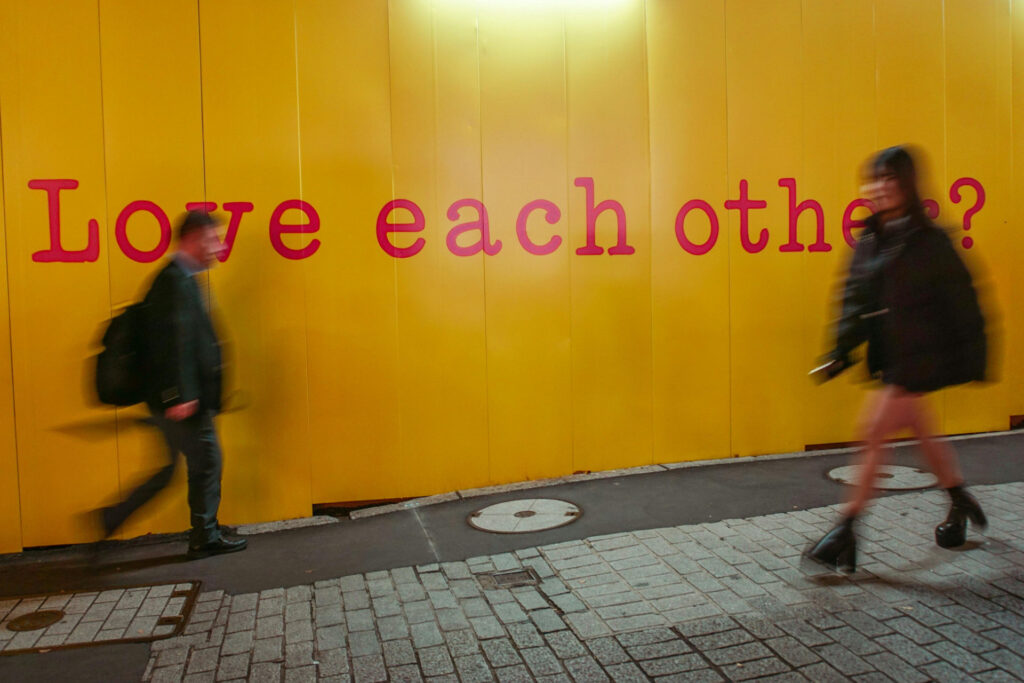
A condition, not a fix
This is where the proposition takes hold, and it requires a shift in how we think about what a municipality can actually do.
Inclusion is not a problem with a solution. It is a condition that requires continuous, local, ongoing effort. You don’t achieve it and move on. You cultivate it, or you don’t; and the moment you stop, it begins to erode. This is uncomfortable for institutions, which are built around projects with deliverables, timelines, and completion criteria. It is also, once accepted, clarifying.
If inclusion is a condition rather than a fix, then the municipality’s role changes. It is not to produce inclusion directly. It cannot mandate that people understand each other, or feel warmly toward each other, or celebrate their differences. Those things, when they happen, happen between people, in specific moments, through contact that no policy scheduled.
What a municipality can do is create the conditions for that contact to become more likely. And it can stop designing only for the people already expected to show up.
Glue, binding agent, and the serendipity machine
Think of it in three layers.
The first is glue: the baseline of civic trust, shared norms, the unspoken agreement that we inhabit the same city and owe each other basic respect. This is what anti-discrimination policy protects. It is necessary, foundational, and worth fighting for. But it is the floor, not the ceiling.
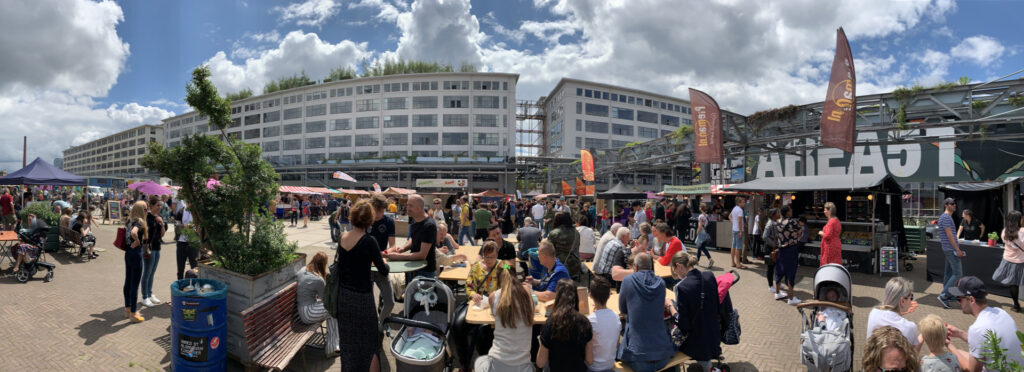
The second is the binding agent: the things that create reason for proximity. A neighborhood market, a sports club, a community garden, a shared problem that needs solving. Not programming designed to celebrate difference (though that has its place), but functional shared purpose that puts different people in the same room for a reason that has nothing to do with their differences. Cohesion as a byproduct of doing something together, not as the goal itself.
The third, and the most generative, is what you might call the serendipity machine: the intentional design of urban texture and shared infrastructure that makes uninstructed encounter structurally likely. Not forcing contact. Not managing diversity. But arranging the city so that the encounter can happen, and then getting out of the way.
This is different from what municipalities usually do. It is not a programme and it does not have a target group. It does not ask anyone to show up, engage, or represent their community. It simply makes it harder to live an entirely parallel life, because the spaces and rhythms of the city keep putting different people next to each other, in ways that nobody arranged and nobody scripted.
The person who didn’t come to the presentation, who will never come to the presentation, is not a problem to be persuaded. They are the person the serendipity machine has its purpose for. Not through outreach or persuasion, but through the design of the world they already move through. The engaged citizen and the unengaged citizen don’t need to be in the same room at a city hall event. They need to be using the same square, the same market, the same park. They need the city to keep putting them next to each other until the other person stops being a category and starts being a face they recognize.
We don’t need to be best friends
Here is what pro-inclusivity actually asks of us, stripped of the perfectionism that tends to haunt this conversation:
We don’t need to fully understand each other. We don’t need to celebrate our differences, or resolve them, or reach some final state of mutual appreciation. We don’t need to be best friends.
We need to be good neighbors.
Good neighbors share a street without requiring that the other person mirrors them. They nod, they help when help is needed, they tolerate the noise and the cooking smells and the different rhythms of a different life. They don’t always understand, and they don’t need to. What they have, without naming it, is enough shared texture to make difference ordinary rather than threatening.
That is not utopia. It is not even ambitious, by the standards of the conversation we usually have about inclusion. But it is achievable, which the utopian version is not. And it is the only version that works for everyone: the engaged citizen, the representative of a named group, the normative outlier with no bureau to call, and the unengaged person who simply wants to live their life in a city that, quietly and without making a fuss about it, was designed to make that possible for all of them.
My friends, living between two worlds, didn’t find each other through a municipal programme. The gay author didn’t write his book because a policy made space for it. The person in the wheelchair at the presentation didn’t need a different research report. They needed the chairs to have been arranged differently.
That is what the serendipity machine is for. It doesn’t ask you to believe in inclusion. It doesn’t ask you to show up. It just makes the encounter more likely.
After that, the rest is human.and more inclusive fixed standard “winter” time.
Comments are closed