A Story about Moral Mavericks and Stubborn Disruptors
Last week, I wrote a slightly sarcastic post about Spotify on a music forum. When I mentioned it to a friend, it sparked a conversation about the articles I’ve recently shared here on LinkedIn, about war economics, European innovation, and the quiet defiance of ‘heretics.’ Turns out, there’s a pattern connecting all of it.
The Spotify Wrapped That Started It All
“So there I was, getting my annual Spotify Wrapped notification: an algorithmically-generated pat on the head meant to make me feel seen. Except Spotify seems blissfully unaware that our family plan exists solely because my family uses it. I switched years ago. My current platform of choice? Qobuz.
Spotify’s been gathering dust in that dark corner of my digital life where apps go to die, alongside the fitness tracker that started sharing my data against my will and a meditation app that stressed me out, not in the least because it kept pushing me to connect with like-minded strangers. It’s the digital equivalent of that broken, sentimental toy you can’t quite remember why you kept it for so long.
My listening time according to the Wrapped data? Not even half a day. Thanks, Spotify, for reminding me that my musical soul belongs elsewhere. As Clayton Christensen might say, Spotify solved one problem (piracy) but created another (mediocrity). I had been an early adopter, but left the platform after increasingly being annoyed by it.”
And that’s where the real story begins.
Someone asked: “But why Qobuz?“
Fair question. And here’s the thing: I don’t have a simple answer. It’s the audio quality. It’s the decent remuneration for artists. It’s also because it somehow feels “more human”, with curated content and a community of audio enthusiasts. There was this moment when I looked at Spotify (ubiquitous, default, inevitable Spotify; making more money than the artists, and diluting its catalog to up their margins) and thought: “This is stupid. There has to be something better“.
For me, it sits with the same kind of positive, almost grassroots, bottom-up movement of like-minded enthusiasts that strive for something else than just convenient consumerism. Qobuz is the boutique record store equivalent; it might not get everything right, but the heart seems in the right place, and it has its own distinct character that seems different from the “big players”.
The “this is stupid”-realisation and the refusal to continue with mindless convenience is not unique to me. It’s not even unique to music streaming. It’s the spark that’s lighting up innovation across Europe, from ocean cleanup to solar cars to seaweed packaging. It’s the push to find a new direction. To do better. To reward reciprocity.
Wait, I’ve Been Doing This
Looking back, I concluded: Qobuz wasn’t a one-off. And it wasn’t a first either. I’ve silently done this many times before.
I’d switched to Mistral AI because I was tired of feeding my queries to American tech giants who treat data like a resource to extract rather than a responsibility to protect. I’d started using Proton for a similar reason: a Swiss secure alternative for online services. I’d started choosing local repair over replacement because the entire “just buy a new one”-economy felt obscene. None of these changes felt like activism. They felt like common sense. Like choosing the option that didn’t make me feel complicit in something fundamentally stupid.

And then I wrote about Brainport, morality and EU business, and about war economics, about how we’ve built systems that prioritise extraction over creation, short-term gains over long-term resilience. And the responses flooded in: “This resonates, but what can I actually DO? I’m not a policymaker. I’m not a CEO. I’m just trying to get through the week.“
That question stuck. Because here’s the thing: disruption isn’t just something that happens to industries. I wrote about it in another article. It’s something that happens for people when they refuse to accept that the incumbent’s way is the only way.
I realised I needed to share my own ‘Wrapped’ and showcase those that make a difference. The nonconformists. The stubborn ones who looked at the obvious and said, “No thanks“.
And how about that? The list of European companies making a difference (turning “this is stupid” into “this could work”) just kept growing. Ocean plastic cleanup. Solar cars. Edible packaging. Solid-state batteries. Carbon capture. Each one started with someone looking at an obvious problem and refusing to accept that it was unsolvable.
Turns Out, We’re Everywhere
Please understand, I’m not writing this to be inspirational. I’m writing it because I need others to see what I’m seeing: we’re not alone in that “this is stupid”-moment. And the people who act on it? They’re not heroes. They’re just stubborn. Like me. And, perhaps, like you.
The “Clean Up Your Own Mess” Brigade
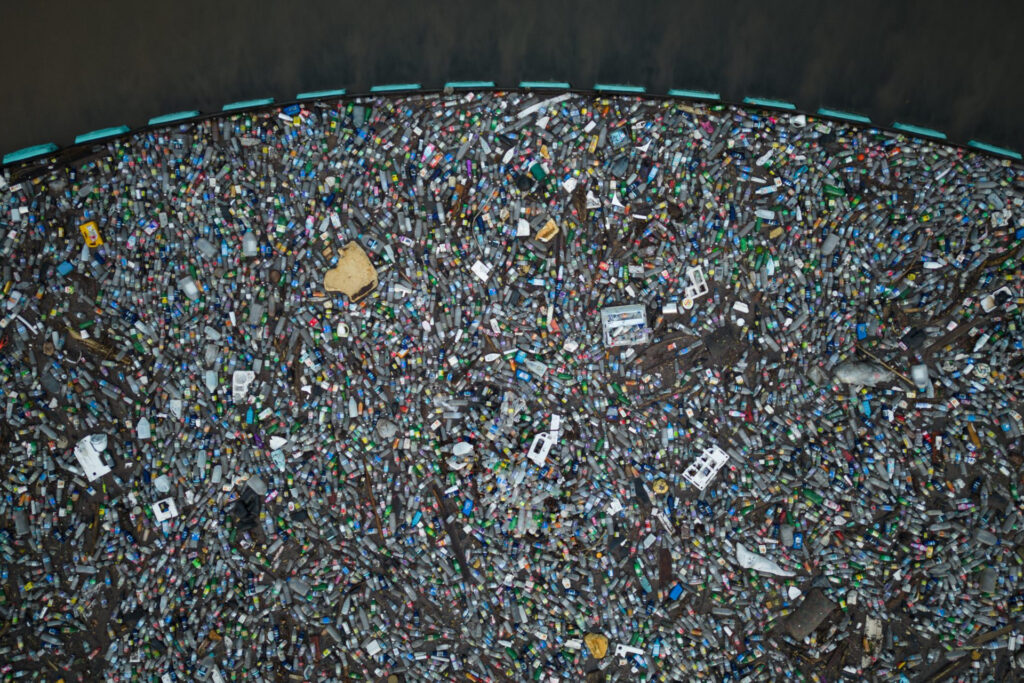
Let’s start with Boyan Slat. At 16, he went scuba diving in Greece and saw more plastic bags than fish. His response wasn’t noble; it was annoyed. “Why can’t we just clean this up?” Most people would shrug and move on. Slat turned it into a school project. Then a TEDx talk. Then, a two-million-Euro crowdfunding campaign from 38.000 donors who didn’t necessarily believe in him, but believed in the idea. Then, finally, a nonprofit with a fleet of Ocean Cleanup systems.
Except (and this is where it gets real), the first full-scale system broke apart in the Pacific in 2018. Slat’s response? “Very annoying. We learned a lot“. No grand speeches about failure being part of the journey. Instead, there was a stubborn refusal to quit.
Then critics pointed out that cleaning the ocean doesn’t stop new plastic from entering. Valid point.
So Slat pivoted to rivers, the source of 80% of ocean plastic. Not because he had some master plan, but because that’s where the problem actually was. When people say something is impossible, Slat once noted, the sheer absoluteness of that statement should motivate you to investigate further. This wasn’t noble defiance. It was stubbornness. And as researchers like Elizabeth Altman and Michael Tushman have shown, stubbornness thrives in ecosystems that let free spirits iterate, fail, and adapt, like the collaborative infrastructure of Brainport Eindhoven or the policy frameworks of the EU Green Deal.
Another example is Notpla (Pierre-Yves Paslier and Rodrigo Garcia Gonzalez). Pissed off by plastic waste at music festivals, they developed edible water bubbles. Early prototypes? A mess. The bubbles burst too easily. People didn’t know what to do with them. They almost gave up multiple times.
The breakthrough came when they realised seaweed could be used for durable coatings and films. But here’s the compromise not many talk about: Notpla had to develop hybrid materials (seaweed plus other biodegradables) to meet durability standards for actual commercial use. Some critics argue this dilutes the “pure” circularity claim. Garcia Gonzalez’s response? “We’re not here to save the world; we’re here to prove that better alternatives exist.“
Early adopters like Just Eat and Lucozade were willing to pay a premium for sustainability, but Notpla still has to compete with cheap, non-recyclable plastics. They’re still navigating this tension between ideal and viable. The market demanded it, not just their idealism. And they adapted.
That’s the thread connecting these stories: none of these people claim to have perfect solutions. They’re iterating, compromising, adapting.
Just like my choice of Qobuz over Spotify isn’t about purity. It’s about choosing better when I can. As Clayton Christensen showed us in The Innovator’s Dilemma, every solution creates new problems. The cycle continues. The point isn’t perfection. It’s refusing to accept that the current solution is the only one.
The “Why Not?” Engineers
Lex Hoefsloot and Arjo van der Ham met as students at Eindhoven University of Technology. Their first project wasn’t a business plan; it was a solar car for the World Solar Challenge, a gruelling 3.000 km race across Australia. They won not because they were the best engineers, but because they were the most stubborn.
After winning, they realised nobody in the auto industry was serious about solar cars. Van der Ham: “We wanted to build a car for the future. But the industry wasn’t interested. They’re not set up for it“. So they decided to do it themselves. Not as entrepreneurs with a grand vision, but as engineers who couldn’t let a good idea die.
In 2016, the five original team members sat around Hoefsloot’s kitchen table and asked: “Should we really try to build a company?” They looked each other in the eye and said, “Let’s try.” They wrote a business plan not because they had venture capital dreams, but because they couldn’t accept that solar cars were impossible.
The Lightyear One, their first car, was a technical marvel and a commercial flop. The company ran out of money. Hoefsloot stepped down as CEO in 2023. They pivoted to licensing their solar tech, not because they wanted to, but because the market wasn’t ready for a €250.000 solar car.
Hoefsloot later admitted: “If I could do it over, I’d have gone to America earlier. We believed too much in doing it all in the Netherlands.” Van der Ham has spoken about the personal toll: missing time with his young children, the strain on his relationship. “You can’t do this without sacrifice“, he said.

But here’s the thing: that stubborn loyalty to Eindhoven (to the ecosystem of TU Eindhoven, Brainport, ASML) gave them a fighting chance in the first place. They didn’t have to build everything from scratch. The infrastructure was there. As management scholars Altman and Tushman have shown, innovation thrives when challengers leverage ecosystems rather than competing head-on with incumbents. Lightyear’s story is a case study in ecosystem-driven disruption, even when that ecosystem couldn’t save them from market realities.
Then there’s LionVolt, a deep-tech battery scale-up, which emerged from the same collaborative engineering ecosystem as Lightyear: it spun out of years of pioneering research at TNO at Holst Centre in Eindhoven.
The true genesis was the technical expertise of Dr. Sandeep Unnikrishnan, who developed the core 3D battery architecture, fused with the commercial strategy of Karl McGoldrick, a veteran entrepreneur who joined to drive the venture’s scale.
Their defiance focused on the technical ceiling of conventional lithium-ion: the fire-risk of liquid electrolytes, and the constraints on power density, not to mention the systemic issues of cobalt mining and recycling. Their patented 3D solid-state ceramic alternative offered inherent safety, ultra-fast charging, and a longer lifespan. This was their answer to the industry’s “This is stupid”-moment.
But like Lightyear, the path wasn’t idealistic. The initial prototypes, while technically superior, were too complex for immediate mass-market applications like EVs. So they did a pragmatic pivot, leveraging their high-density, safe technology to target high-value, niche applications first: wearables, IoT sensors, and medical devices. They opted to prove the technical and manufacturing durability of ceramics in a controlled environment.
They are stubbornly building a better alternative, but they are pragmatic about where and how they sell it. They chose strategic partnerships within the Dutch industrial network over chasing fast, hype-driven VC money. They are not claiming to solve all of lithium’s problems, but are building a fundamentally better product, focused on performance and safety, one engineering compromise at a time. It is disruption delivered through disciplined, ecosystem-backed defiance.
One could say that this, on a very different scale, is a Qobuz moment. It’s your [insert your thing here] moment. It’s not about being perfect. It’s about refusing to accept that the default is the only option.
The Quiet Circulators
But, wait, there’s more. The deeper I dig, the more examples emerge. And it’s not random. It’s a pattern of re-architecture. None seem isolated examples; they’re part of a growing movement that’s redefining entire industries.
Here’s a snapshot of what’s happening across Europe right now:
- Circular Economy: Infinited Fiber turning textile waste into new fabrics for H&M and Patagonia. Fairmat recycling aerospace composites into high-value materials. Refurbed offering a marketplace for refurbished electronics to cut e-waste.
- Food & Waste:Too Good To Go fighting food waste across 19 countries. The Modern Milkman offering a return-and-reuse grocery service. Vinted enabling an online secondhand clothing marketplace. Resortecs making heat-dissolvable stitching for easier garment recycling. ProteinDistillery turning beer waste into food.
- Energy & Climate: Carbyon’s direct air capture tech, more efficient than traditional methods, founded by physicist Hans de Neve: “I don’t march in protests. I build things.” Mosa Meat’s lab-grown beef, the first to receive EU regulatory approval. GAIA BioMaterials developing biodegradable plastics for packaging and products.
- Tech & Ethics: Ecosia planting trees with search engine revenue. Mistral AI treating data as a responsibility, not a resource to extract. SmaXtec offering sensors and analytics for livestock health, reducing animal suffering and inefficient farming. Adphos supplying near-infrared thermal processing and drying solutions.

These aren’t just companies. They’re proof that the next revolution isn’t waiting for permission. It’s already here, solving stupid problems one stubborn choice at a time.
The list goes on: enginzyme (Sweden) is pioneering enzyme-based biomanufacturing, replacing fossil chemistry with cell-free cascades. GreenBig (France) b:bot kiosks automate PET recycling, turning bottles into flakes at collection points. Sulapac Ltd (Finland) wood-based materials are certified microplastic-free, used by Chanel and Lumene in cosmetics packaging. INERATEC (Germany) e-fuels plants are scaling synthetic fuels for aviation and shipping.
These aren’t unicorns. They’re solving specific, stupid problems that everyone else has accepted as inevitable. They’re gazelles: fast, adaptable, working together.
And the more I look, the more I find. Which means either I’m confirmation-biasing myself into a feel-good bubble, or there’s actually something happening here.
Why Europe, Why Now?
So why are all these heretics European? Is it coincidence? Nationalism? Am I just cherry-picking to feel good about my continent?
Maybe. But here’s what I keep noticing: these companies aren’t emerging in spite of European infrastructure. They’re emerging because of it.
Eindhoven’s Brainport isn’t just a tech hub. It’s a collaborative ecosystem where government, institutes, and companies share talent, resources, and risk. It emerged from crisis: after DAF went bankrupt and Philips restructured, the region reinvented itself through stubborn, strategic rethinking. Out of economic hardship came resilience.
When Lightyear needed battery expertise, they didn’t have to start from scratch. When LionVolt needed industrial partners, they were already in the neighborhood. This isn’t competition. It’s infrastructure.
Copenhagen has turned itself into a living lab for green tech. Ørsted, once DONG Energy, divested oil and gas by 2017 to become the world’s largest offshore wind developer.. Copenhagen Infrastructure Partners invests in global renewable energy projects with local impact models. Too Good To Go launched there because the city’s circularity policies made food waste reduction profitable, not just moral.
Tallinn’s digital governance has made Estonia a benchmark for transparency and efficiency. Over 100.000 global citizens have become e-residents, a model for borderless entrepreneurship. Bolt (the EU’s answer to Uber) focuses on fair labor practices, not just undercutting taxis. Veriff prioritises privacy in identity verification, a direct response to GDPR creating demand for ethical tech. This isn’t regulation as constraint. It’s regulation as market creation.
Berlin’s open-source culture birthed Ecosia (search engine that plants trees) and hosts Factory Berlin, where sustainability startups share workspace and ideas. SAP’s Innovation Center works on projects like GreenToken, tracking sustainable supply chains. The city’s collaborative ethos makes “competition” feel outdated. Why compete when you can build together?
Lyon and Barcelona are doing the same in deep tech and social innovation. BioMérieux proving health innovation doesn’t need Silicon Valley. Bindi using AI to combat gender bias in hiring. SokoTech connecting local artisans to global markets without extraction. Mobile World Capital in Barcelona driving 5G for social good and digital inclusion.

Here’s the pattern: European policy isn’t constraining innovation. It’s enabling it. GDPR creates demand for privacy-first tech. The Green Deal makes circular economy models like Fairmat and Notpla economically viable. The AI Act establishes trust frameworks that let challengers compete on ethics, not just speed.
Christensen showed us that disruptors thrive when they serve overlooked markets. Researcher Erran Danneels proved that real disruption starts with dismissed needs, not flashy breakthroughs. And Altman and Tushman demonstrated that challengers succeed when they leverage ecosystems, not just competition.
Europe isn’t just producing heretics. It’s building the infrastructure of defiance: policies that create markets, cities that test solutions, and hubs that share risk. That’s why Qobuz can compete on quality, Notpla on sustainability, and Lightyear on resilience. They’re not just selling products. They’re proving demand for a better way to build markets.
This isn’t an accident. It’s architecture. And it’s why my Qobuz choice (my vote for resilience by the underdog over extraction by a market leader) matters: it proves demand exists for this new infrastructure.
So What?
Alright, so I’ve taken you on a tour of European rebels and the infrastructure that enables them. But let’s get back to the actual question: What does this mean for you? For me? For the person who read my war economics piece and asked, “What can I actually do?“
Here’s what I’m NOT saying: quit your job and start a circular economy startup. Boycott every American tech company. Achieve perfect ethical consumption. That’s exhausting, impossible, and frankly, a setup for failure.
Here’s what I AM saying: find your Qobuz.
Why? Because these aren’t just stories about far-off innovators; they’re proof that change is possible, even at the individual level.
For me, music streaming sets an example. So does the use of AI. And a dozen other small choices I didn’t even recognise as a pattern until recently. These examples underline the options we can all choose to consider. None of these are perfect. Qobuz isn’t flawless. It’s just better aligned with what I value. Mistral isn’t solving all of AI’s problems. It’s just not treating my data like something to extract.
This isn’t about purity. It’s about seeing alternatives and choosing them when you can.
Some days, that’s easy. Some days, it’s inconvenient. Some days, it’s more expensive. Some days, I still use Spotify to search for something Qobuz seems unable to find. I’m not a saint. I’m just stubborn about the things that matter to me.
And here’s the thing that the War Economics responses taught me: you already know what matters to you. You already have that “this is stupid”-moment sitting in the back of your mind. The thing you keep using because everyone else does, even though you know something better exists. The compromise you’ve accepted because changing feels hard.
I can’t tell you what your Qobuz is. Maybe it’s a search engine. Maybe it’s food waste. Maybe it’s fashion. Maybe it’s just fixing what you already own instead of buying new.
The point isn’t the specific choice. The point is making the choice. Because every time you do, you’re not just opting out of an extractive system. You’re opting into one that builds value instead of extracting it. You’re proving demand exists for something better. You’re making it easier for the next free spirit to survive.
As the Christensen Institute’s work on disruption reminds us, every revolution turns into an incumbent state until the next cycle begins. Spotify solved piracy but created new problems: algorithmic mediocrity, artist exploitation, a race to the bottom.
The founders we’ve met aren’t just building alternatives; they’re planting the seeds of the next disruption.
It’s not a call for perfection. It’s a call for stubbornness. Because every time you choose Qobuz over Spotify, or Too Good To Go over food waste, or a repair over replacement, you’re not just making a consumer choice. You might join a quiet revolution. Not with grand gestures, but with people who look at the default and say, “No thanks“.
Your Move
So here we are, back where we started: a sarcastic Spotify Wrapped post and a question. “Why Qobuz?“
The real answer? Because I got tired of accepting the default. Because I’d rather support the stubborn engineers in Eindhoven, the seaweed packaging rebels in London, the ocean cleanup kid who refused to shrug and move on. It’s the answer to the question “What difference does one person make?“
Here’s the difference: Boyan Slat was one person annoyed by plastic in Greece. Lex Hoefsloot was one student who thought solar cars made sense. Pierre Paslier was one guy pissed off by festival waste. I’m one person who’s decided to start a volleyball club, join the neighborhood watch, support the Red Cross, and promote the Eindhoven Innovation Cafe.
None of us are heroes. We’re simply putting some effort to make things better and to disrupt the status quo.
So: what’s the thing that makes you think, “This is stupid. There has to be something better?“
And more importantly: What are you going to do about it?

P.S. The Uncomfortable Truth About Cleanup
There’s one final thought that hit me just before publishing, and it’s necessary enough to warrant this postscript.
I stand by everything above. The Slats, the Hoefsloots, the founders of Mistral AI and Too Good To Go deserve recognition. But as I was rereading my own work, something uncomfortable became clear: I’ve spent this entire article celebrating the cleanup crew.
Look at the list again. Ocean plastic removal. Carbon capture. Textile waste recycling. Food waste apps.
Packaging alternatives to replace the plastic we shouldn’t have made in the first place. Even the “innovative” ones like solar cars and solid-state batteries are essentially corrections for the mess we made with fossil fuels and lithium mining.
The Systemic Failure Gap
Every company I’ve championed is running on a Systemic Failure Gap mission: the massive market opportunity created by the externalised costs of incumbent industries. We’ve built an economy where fixing what’s broken has become more profitable than preventing the breakage in the first place. Because prevention doesn’t scale. Cleanup does.
Consider the absurdity:
- Fairmat recycles aerospace composites because the industry created a waste problem worth €1.8 billion. We’re treating highly skilled engineering as groundbreaking when it’s fundamentally about undoing damage that should never have happened.
- Carbyon is developing brilliant direct air capture technology to scrub CO₂ from the atmosphere. This work is necessary only because previous industrial regimes treated the sky as a free dumping ground. We’re celebrating planetary-scale repair work.
- Ecosia and Mistral AI get praised for treating data and search results responsibly. But this only qualifies as ethical innovation because the default (Google, Meta, Spotify) chose extraction over stewardship.
The pattern is clear: We’ve normalised destruction so completely that we now celebrate the people willing to clean up after us.
So What Does This Mean?
I’m not retracting the call to action. Find your Qobuz. Make those stubborn choices. Support these companies.
But do it with clear eyes. You’re not just supporting innovation. You’re supporting correction. These founders aren’t building the future; they’re trying to repair the present enough that a better future becomes possible.
The ultimate goal isn’t to create more companies like these. The goal is to build systems that make them unnecessary.
That’s not idealism. That’s pragmatic defiance in its purest form: refusing to accept that the cycle of damage and repair is the only option.
The revolution isn’t just about supporting the cleanup. It’s about demanding we stop making the mess.
Your move.
https://www.linkedin.com/pulse/clear-up-your-own-mess-roland-biemans-pb4xe
Comments are closed