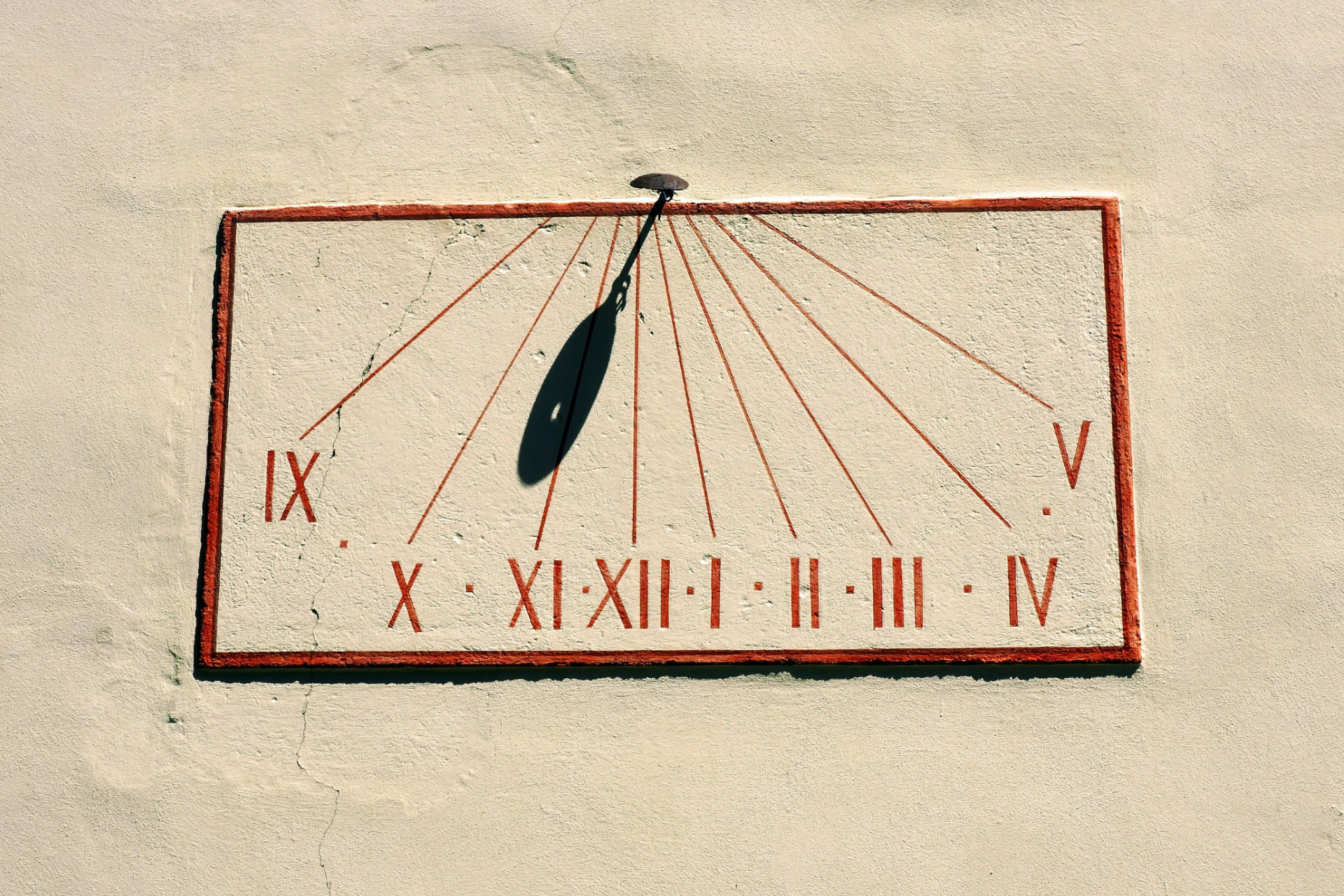
On biology, geography, and why the real fix goes far beyond the clocks.
Every spring, people engage in a collective act of gaslighting. They move the clocks forward, fill their social media feeds with performative enthusiasm for “longer evenings”, and systematically ignore the biological invoice that 25% of the population is forced to settle immediately. I am one of those that bear the burden.
To the so-called “morning mafia”, Daylight Saving Time is a minor inconvenience, the equivalent of an extra espresso shot. To me, it is nothing short of an illegal raid on my physiology. My body wakes just before 09:00 without fail, no alarm required; my melatonin peaks around 01:00. An 08:00 meeting in the summer doesn’t just feel like it’s happening at 06:00 in the dead of night, because, biologically, that is exactly what it is.
When someone tells a night owl to “just set an earlier alarm”, they are making the chronological equivalent of demanding a left-handed person write with their right hand. It’s not advice; it’s an attempt to fix something that isn’t broken. And yet, year after year, we accept this as normal.
The Geometry Problem
Before we even address the biological toll, we must confront the geographic absurdity of Daylight Saving Time.
Amsterdam, even on standard winter time (CET), is already running roughly 40 minutes behind true solar noon, with the sun reaching its peak at 12:40. This is a bureaucratic compromise, a slight misalignment we’ve learned to live with. But then comes DST. Suddenly, that solar peak is pushed to 13:40. In effect, we are operating on the same clock time as Athens while physically residing 1,480 kilometers to the west.
This isn’t just a quirk of scheduling. It’s a political fiction, a time zone we’ve invented to pretend the sun is somewhere it isn’t. The origins of this fiction trace back to the 1970’s oil crisis, when governments, desperate to conserve energy, decided that shifting clocks would somehow trick us into using less electricity. Later, the tourism and retail lobbies latched onto the idea, selling it as a boon for evening commerce. But in terms of geographic and biological reality, Daylight Saving Time is absurd.
We’ve legislated a temporal delusion, one that forces us to live out of sync with the natural rhythms of our latitude. CET aligns us reasonably with Berlin’s natural rhythm. DST pretends it’s perpetual midsummer. One of these is honest. The other is a political fiction from the 70’s that we’ve never bothered to retire, because the tourism lobby likes late sunsets and the rest of us have apparently learned to cope.

Chronobiology Is Not Lifestyle Advice
We live in an era that celebrates inclusive design and accessibility in nearly every domain, except when it comes to the most fundamental human variable: our internal clock. The research on this is not just clear; it’s damning.
Studies published in Current Biology (2020) show that the transition to DST triggers a 5–10% spike in heart attacks and strokes in the week that follows. The Munich Chronobiology Group found that workers lose an average of 55 minutes of sleep during the shift. When you scale that loss across the Eurozone, the cost isn’t just measured in groggy mornings; it’s measured in billions of Euro’s. Nearly €180 billion in lost productivity and healthcare expenses, all for the sake of an artificial “extra” hour of evening light.
Professor Russell Foster, a chronobiologist at Oxford’s Sleep and Circadian Neuroscience Institute, has documented how every aspect of human physiology and behavior is constrained by a 24-hour biological beat, It’s a truth that evolved over millennia and cannot be legislated away by moving a clock forward. For neurodivergent individuals, particularly those with ADHD or autism, the consequences of forcing a mismatch between that internal rhythm and social scheduling may not be mere inconveniences. They can be chronic stressors; a legally mandated schedule that is actively hostile to their biology.
Imagine being told, year after year, that your body’s natural rhythm is incompatible with the world’s operating system. That’s not a personal failing. That’s a systems failure.
An Industrial Fossil in a Digital Age
The 9-to-5 workday isn’t a natural law. It’s a relic of the Industrial Revolution, a holdover from an era when factories needed bodies at machines simultaneously to maximise mechanical efficiency. But we no longer live in 1850. We live in a post-industrial knowledge economy, where the rigid synchronisation of labor is not just unnecessary; it is, in fact, counterproductive.
So why do we still cling to it?
Why does a software developer need to be “online” at 08:30 if their brain doesn’t hit peak performance until 10:30? Why do we force teenagers (whose adolescent biology is wired for later sleep) into classrooms at hours when their cognitive function is still in deep-sleep mode? Why do we continue to treat physical presence as a proxy for productivity, when study after study shows that flexible schedules lead to better output, higher job satisfaction, and lower burnout rates?

The answer isn’t scientific, it’s cultural. We’ve internalised the idea that early risers are virtuous and late risers are lazy, despite the fact that chronotype (whether you’re a ‘lark’, an ‘owl’, or somewhere in between) is as inherent as eye color. We’ve built a society that rewards compliance with an arbitrary schedule, then wonder why so many of us are exhausted, stressed, and disengaged. This isn’t about discipline, it’s about design. And the design is broken.
The Roadmap to a Healthier Sync
Abolishing Daylight Saving Time is the low-hanging fruit of this debate. The real work lies in redesigning our societal infrastructure to respect human diversity rather than suppress it.
- Permanent Winter Time: Aligning With the Sun
The first step is simple: stop tinkering with the clocks. Permanent standard time (CET) isn’t just the most honest option; it’s the only physiologically defensible baseline. It aligns our social rhythms with solar reality, reducing the mismatch between our bodies and our environment. As a bonus, it would also mitigate the seasonal affective disorder that plagues many during dark winter months, by ensuring that morning light — when it’s most needed — isn’t artificially delayed.
- Flexible Start Windows: Letting Biology Dictate the Schedule
Where operationally feasible, allow for flexible start times, say, between 07:00 and 10:00, so that people can begin their workday when they’re biologically primed to perform. Companies that have adopted flexible schedules report higher productivity, lower absenteeism, and improved mental health. And as an added benefit, staggered start times flatten peak loads on transportation systems. The commute problem partially solves itself.
- Compensating for Rigidity: Acknowledging Those Who Can’t Flex
Not every job can accommodate flexibility. Healthcare workers, construction crews, logistics operators: their schedules are fixed by operational necessity. Their constraints shouldn’t dictate the rhythm of everyone else’s life. But they should be compensated fairly for absorbing an externality on society’s behalf: higher shift premiums, better recovery time, and genuine public recognition.
- Schools That Follow Biology, Not Bureaucracy
The American Academy of Pediatrics has repeatedly called for later school start times, citing measurable improvements in academic performance, mental health, and even teen car accident rates. Adolescent circadian rhythms genuinely shift later; this is not laziness, it is physiology. A secondary school starting at 08:30 for students whose brains aren’t online until 09:30 is not a discipline problem. Again: t’s a design failure.
The Counterarguments, Briefly
“But the tourism industry needs evening light.”
Shops and restaurants can extend evening hours without resetting the clock for millions of people. Spain does this routinely. It’s called adjusting business operations, not legislation.
“People will just stay up later.”
Research on flexible scheduling consistently shows that when people can align work to their chronotype, sleep quality improves. You don’t stay up later because the clock says so. You sleep when your body allows it.
“It’s always been this way.”
Smoking was always done on planes, too. Tradition is not a policy argument.

The Clock Is an Interface
The sun does not lie. It rises and sets according to the laws of physics, not the whims of policymakers or the demands of commerce. Our clocks should do the same. At its core, this is a question of user-centred design. When an interface — whether it’s a smartphone app or a timekeeping system — no longer serves its users, you don’t blame the users. You iterate the design.
The Political Failure Nobody Wants to Name
The EU’s own public consultation drew 4,6 million responses, 84% in favour of abolishing DST. It was one of the largest public consultations in EU history. The European Parliament voted to end it in 2019, with the change intended to take effect in 2021. Then it stalled in the Council, lost in coordination disputes between member states. By spring 2025, the European Commission signaled it might withdraw the proposal entirely. Spain has since pushed for a renewed initiative in 2026.
The clocks changed again this morning.
84% of 4,6 million people asked for one thing. Seven years later, the answer is: we’re still working on it. If you want your representatives to act, write to them. Ask them what 84% needs to look like before it becomes a mandate.
The clock change is simple. But the clock is not what needs changing. It’s time we stop the DST absurdity and choose the healthier and more inclusive fixed standard “winter” time.
Sources
- Roenneberg, T. (2012). Internal Time: Chronotypes, Social Jet Lag, and Why You’re So Tired. Harvard University Press.
- Current Biology (2020). Daylight Saving Time and Artificial Time Zones – A Battle Between Biological and Social Times.
- RAND Europe (2016). Why Sleep Matters: The Economic Costs of Insufficient Sleep.
- Munich Chronobiology Group (2019). Sleep loss following DST transition.
- American Academy of Pediatrics (2014). School Start Times for Adolescents.
Comments are closed