A career in systems, stories, and solutions.
Most professional portfolios show you logos, project names, and client testimonials. Mine can’t. Not because of a lack of work, but because of the nature of it. What follows is something more honest: an account of how I’ve worked, what I’ve built, and what has driven me since I graduated.
A significant part of my career has unfolded under non-disclosure. That’s not unusual for the kind of work I’ve done: executive engagements, product development partnerships, strategic turnarounds, confidential audits. The organisations involved were often operating in competitive or sensitive contexts, and discretion was part of the agreement.
What I can offer instead is a genuine account of the patterns, the challenges, and the thinking behind it all. Across four interconnected areas of work, I’ve helped organisations move from confusion to clarity, from stagnation to momentum, and from good ideas to working realities. The names stay private. The substance doesn’t.
01
Research & Development
BRIDGING INNOVATION AND APPLICATION
The most interesting problems I’ve worked on were the ones that didn’t have names yet. The space between a technical breakthrough and its practical application is rarely clean; it’s full of untested assumptions, misaligned expectations, and the friction between what engineers build and what people actually need.
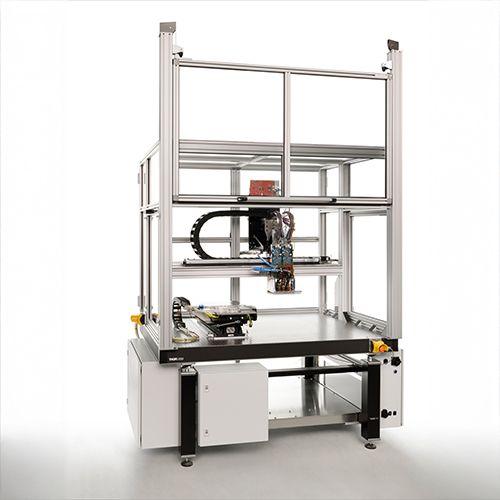
My R&D work has spanned hardware and software development for industrial production environments, feasibility studies, application benchmarking, and technical audits. I’ve co-developed systems that introduced genuinely new capabilities to their sectors, from spectral colour processing to integrated lab-to-production workflows. I’ve written white papers and technical reports across colour science, ink chemistry, software integration, and production systems, often in collaboration with industry specialists and research partners.
What I’ve learned is that technical excellence and practical usability are not the same thing, and bridging that gap requires more than domain knowledge. It requires the ability to hold a user’s perspective while standing inside the engineering process, and the patience to keep asking: who is this really for, and what does it need to do for them?
“The best solutions don’t announce themselves. They disappear into the workflow. And suddenly, people can focus on what actually matters.”
02
Company & Business Development
BUILDING ORGANISATIONS THAT CAN SUSTAIN THEMSELVES
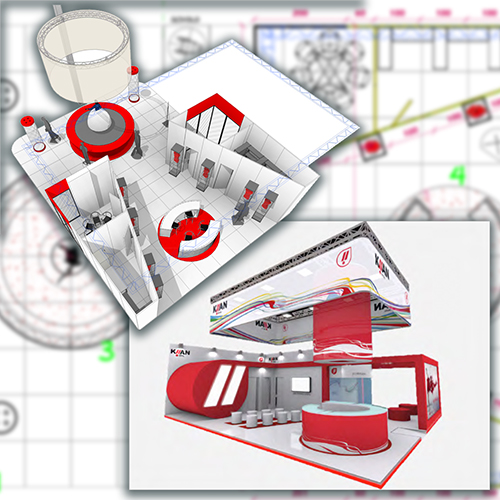
I’ve worked with companies at almost every stage of their development; from early-phase ventures finding their footing, to established industry players navigating transitions they hadn’t anticipated. In some cases I stepped into executive or management roles; in others I came in as an external partner to diagnose, redesign, or relaunch.
The work has included commercial strategy, operational restructuring, go-to-market design, and the kind of slow, unglamorous work of getting an organisation’s internal logic to match its external ambitions. I’ve run audits that revealed not just inefficiencies, but the cultural patterns behind them. I’ve run workshops that helped leadership teams see their own organisations with fresh eyes; not to criticise, but to unlock what was already there.
I’ve helped rebuild sales and marketing functions, co-developed competence centres, and been part of founding teams that took an idea from concept to commercial reality. The thread across all of it has been the same: sustainable growth requires internal clarity, and that clarity rarely comes on its own.
“Every company eventually reaches the edge of what got it there. My role has often been to help organisations see what’s next, without losing what made them worth building in the first place.”
03

Marketing & Communication
PRECISION OVER VOLUME – SUBSTANCE OVER NOISE
I’ve been writing professionally for most of my career. For trade publications, for internal teams, for international audiences at conferences and trade events. I’ve spoken on stage at major industry events across Europe and the USA, and contributed to online programmes reaching global audiences. I’ve also taught, run masterclasses, and designed communication frameworks for organisations that had excellent work to show but struggled to articulate it.
What I’ve consistently found is that the communication problem is rarely about finding the right words. It’s about the thinking that precedes the words. It’s about understanding what genuinely differentiates a product or service, who the audience is and what they actually care about. And it’s about how to earn credibility with people who can see through hype immediately.
Technical and industrial audiences are particularly unforgiving in this regard. They don’t always need enthusiasm; they do need precision, accuracy, and a clear sense that you understand their world. I’ve helped companies navigate product launches, brand repositioning, and GTM strategies by starting with that respect for the audience’s intelligence and working outward from there.
“Good communication in technical markets isn’t about simplifying the story. It’s about finding the version of the truth that your audience can act on.”
04
Motivation, Branding & Positioning
HELPING PEOPLE AND ORGANISATIONS FIND — AND OWN — THEIR DISTINCT VALUE
Positioning work is some of the most misunderstood in the professional services world. It’s frequently reduced to visual identity or messaging frameworks. But the real work is harder and more interesting: it’s about helping an organisation understand what it actually stands for, separate from what it wishes it stood for, and then finding the language and structure that makes it real for the people it needs to reach.
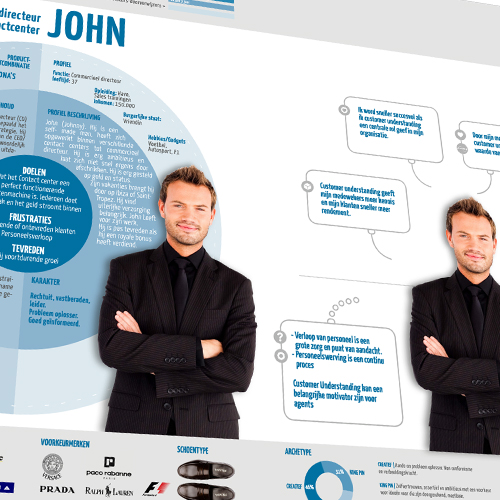
I’ve developed brand identities and positioning frameworks for international product launches, built alignment tools that help leadership teams surface and resolve divergent assumptions, and designed persona frameworks grounded in motivation research rather than demographics. I’ve also worked on the more granular end: customer insight programmes, sentiment analysis using neuroscience-based principles, and the kind of layered assessment work that reveals how a brand is actually experienced versus how it’s intended.
The common thread is a belief that authentic positioning — the kind that holds up under scrutiny and over time — can only emerge from genuine self-knowledge. That requires asking harder questions than most brand processes allow for. It’s the part of the work I find most rewarding, precisely because the resistance to it is usually a signal that something important is being uncovered.
“Positioning isn’t about standing out. It’s about standing for something. And having the honesty to know the difference.”
If you’re facing a challenge that feels too tangled to name cleanly
— across strategy, development, communication, or positioning —
it’s worth a conversation.
Chances are, it’s a pattern I’ve encountered before.
I got to know Roland as a knowledgeable person who is always eager to learn (not only about marketing and sales, but also in-depth about the products themselves). Working with him is a pleasure as he is enthusiastic about his work, has good communication skills and is a true ‘people person’. He’s an asset to any organisation.
Edgar Visser
Ware To Go
Roland is a manager that has been working in the very challenging environment of multinational company. He is a very skilled person, serious and friendly. Team building, logic and common sense are the values he recognises. He made a lot of big projects, spending a lot of energy on them and with great results. It was a pleasure working with him.
Daniele Busetti
Kiian Digital
I had the pleasure of working with Roland as art director on the corporate identity of Hollanders Printing Systems. Roland is a sympathetic and enthusiastic professional who always keeps his eye on quality. In his case Quality with a capital Q. He only lets go when the optimal achievable results are accomplished.
Jan van der Spoel
VIS Free Format Communicatie
It was a pleasure to work together with Roland for several different occasions at international level. I liked his direct and efficient approach. As a Board member of ESMA, Roland helped the association to build its international network and connection to digital textile printing.
Peter Buttiens
ESMA
Having worked with Roland over the past three years I have found him to be not only reliable but also the most honourable person I have done business with; bringing an approach of ‘client needs first’ which is something so often quoted and so often compromised.
Carl Archer
Image Reports
Roland is a focused individual with great product marketing skills – whether it is to define the positioning of a new product, turning features into consumer benefits or simply having a great knowledge of the competition.
Guy Schepens
Ask 4 Smart