The streets are cold in Minneapolis. On January 7, 2026, 37-year old Renée Good was shot in the head by an ICE agent. The federal narrative immediately labeled her a “domestic terrorist” who “weaponized her vehicle”. Eyewitnesses and video footage suggest a different story: a woman caught in a difficult manoeuvre, and a state apparatus primed to fire first and justify later. As of this writing, investigations continue, but the competing narratives themselves reveal something essential about this moment: the ability to flood the zone with enough friction means facts become tribal allegiances.
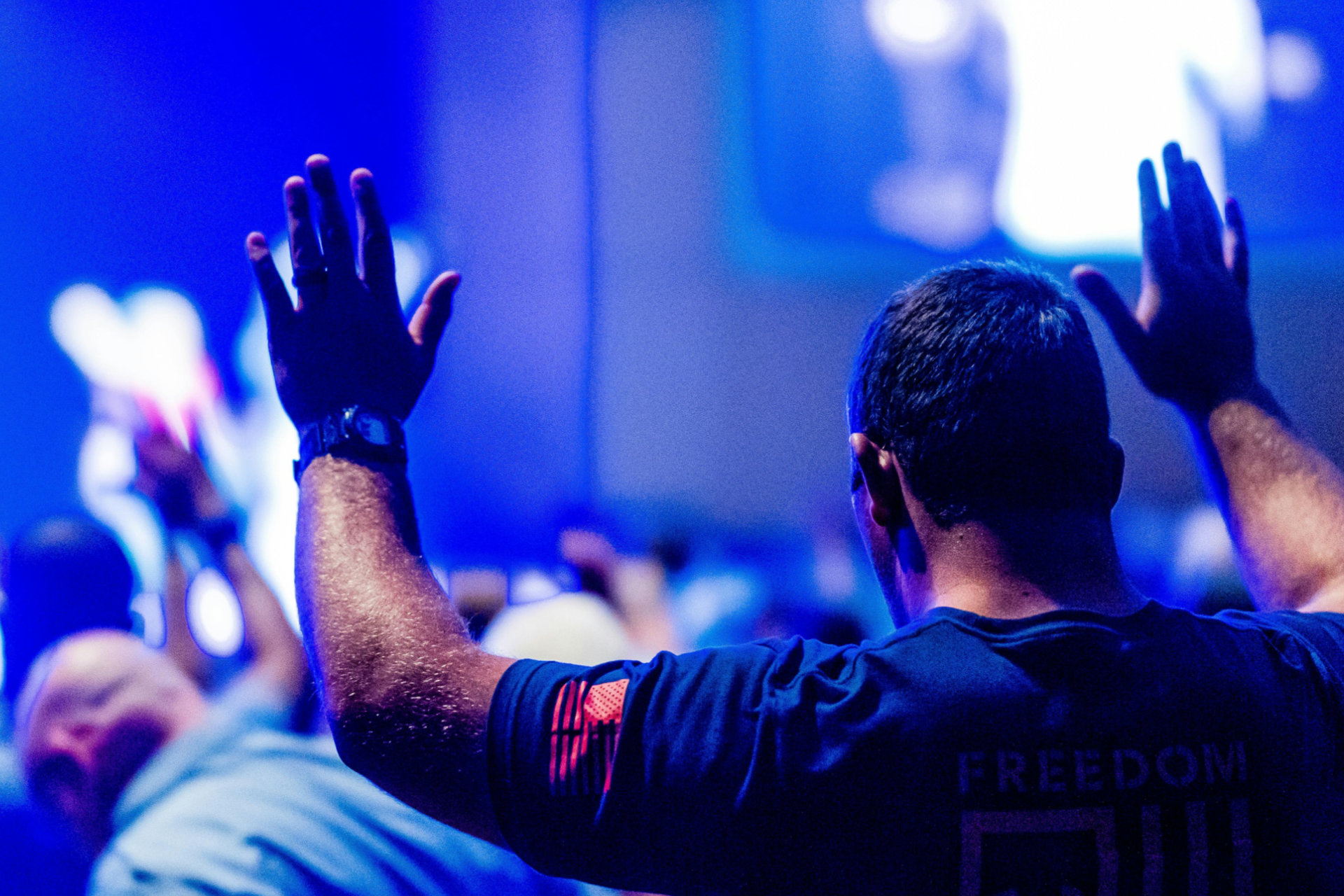
Six and a half thousand kilometers away, in my home city of Eindhoven, a very different kind of confrontation was in the making. Frontrunners Ministries, led by Tom de Wal, was set to host a “Revival Week” at a nearby conference hotel. The promise? Miracles for MS, Parkinson, cancer, and the “cleansing” of the LGBTQ+ “sickness”.
On the surface, a bullet and a blessing have nothing in common. But in my head it clicked: both are the result of the same underlying issue. Let’s call it the Architecture of the Void; the deliberate destruction of common ground, packaged as strength and sold as identity.
The Loneliness Engine
We live in the most connected and most isolated era in human history. The individualistic society promised us freedom but, instead, it delivered loneliness. We seem adrift in a world where traditional sources of belonging (think: neighborhoods, workplaces, civic institutions, shared public spaces) have been systematically dismantled or hollowed out. What remains is a vacuum, and into that vacuum, movements rush with a simple offer: come to us and belong to us, and we’ll tell you everything will be okay. We’ll give you meaning. We’ll give you peace. We’ll give you love. And yes, we’ll also tell you who to hate.
And so the story begins. It’s the same structure every fairy tale leans on: good and evil, temptation and confrontation, the eternal struggle between what’s right and what’s wrong. We are wired for this narrative, yearning for a hero to save the day. There’s a reason these age-old stories endure, retold across generations. They serve as reminders of virtue, and warnings we’re meant to remember.
The ICE defenders who justify Renée Good’s death don’t do so because they’ve carefully studied the facts; they do so because she’s been marked as “other”, and defending the tribe requires defending the narrative, no matter what the video shows. To question the official story is to risk exile from the only community that offers them identity and purpose.
The followers of Frontrunners Ministries don’t attend despite the anti-LGBTQ+ rhetoric; many attend because of it. The price of belonging is accepting the tribe’s enemies as your own. The more willing you are to cross lines that outsiders find offensive, the more you prove your loyalty. The nose-ring, the sexual orientation, the “wrongness” of the other; these become the passwords to community.
This is the same mechanism at work when Pegida supporters put pork on the BBQ in front of a mosque, when Farmer’s Defence Force members block distribution centers with tractors, when football hooligans clash in the streets. The specific cause varies, but the formula is always the same: give people an enemy, awaken their anger and disgust, then offer salvation through collective action. Dehumanize the other, identify yourself with the good, the righteous, the victorious.

Before we judge tribe members too harshly, we must understand what they’re seeking: meaning, peace, love, belonging. These aren’t trivial needs; they’re so fundamental that people will accept terrible bargains to meet them. They’ll accept anti-LGBTQ+ rhetoric if it comes packaged with warmth and community. They’ll defend the indefensible if it means not being cast out into the cold again. They’ll participate in cruelty if it gives them a role in a story that finally makes sense of their anger and confusion.
The void is not an absence we stumbled into. It is an architecture, sometimes even deliberately constructed. And it stands because those who benefit from our division have engineered or benefit from the loneliness that makes us desperate for any tribe that will have us.
The Mechanism of Tribal Exploitation
To understand how we got here, we must see how human need transforms into profit and power. The void is constructed through a three-part mechanism, and each part exploits our loneliness in specific ways.
First, the erasure of shared truth. Hannah Arendt warned us in The Origins of Totalitarianism: “The ideal subject of totalitarian rule is… people for whom the distinction between fact and fiction… no longer exists”. When a government or movement floods the zone with competing narratives, when every claim has a counter-claim and every witness has a counter-witness, reality itself becomes tribal property. You don’t believe the facts; you believe your people. This isn’t a bug; it’s a feature. When truth is tribal, you can’t leave the tribe without losing your grip on reality itself.
Second, the installation of the scapegoat. René Girard explained this through mimetic desire: we want what others have, and this wanting creates conflict. To resolve the chaos without addressing its structural causes, we identify a scapegoat. We seek someone to blame, someone whose exclusion will restore order. The scapegoat mechanism offers what Girard called “unanimity minus one“: we can all belong together, as long as we agree on who to cast out. The beauty of the scapegoat, from the tribe’s perspective, is that it transforms isolation into community. You’re no longer alone; you’re part of “us”, united against “them”.
Third, the marketing of participation as neutrality. This is perhaps the most insidious part, because it captures even those who think they’re too sophisticated to fall for tribalism. The machine doesn’t require true believers; it thrives on passive consumers who tell themselves their participation doesn’t count. “I know it’s problematic, but…” becomes the mantra of the passive tribe, and their money, their attention, their presence, builds the framework of isolation just as effectively as the zealot’s devotion.
The genius of this three-part mechanism is that it creates a self-reinforcing loop. Loneliness drives you toward the tribe. The tribe gives you enemies to explain your pain. Defending the tribe against those enemies becomes your identity. And questioning any of it means losing everything all at once: community, meaning, and reality itself.
Identity in Isolation
The true sophistication of this architecture is that it operates at every scale, each level feeding the others. Those hovering above — the ones who benefit from our division — aren’t creating tribalism from scratch. They’re channeling the loneliness that already exists, directing the anger that’s already present, and profiting from the belonging people desperately need.
Macro: Engineering Isolation to Sell Sovereignty
We are witnessing the dismantling of the global commons, and it’s being sold as strength.
The current U.S. administration’s pivot toward isolationist policies and proposals like a “Strategic Bitcoin Reserve” can be understood through multiple economic lenses; as a hedge against inflation, as a challenge to dollar hegemony, as technological opportunism. But there is also something else at work: a logic of deliberate decoupling that mirrors the tribal mechanism at the individual level.
When you withdraw from international law and call it “sovereignty”, when you treat diplomacy as purely transactional, when cooperation becomes a weakness rather than a strategy, you are building a fortress. You are creating a world where the “other” nation is no longer a necessary trading partner or diplomatic ally, but merely a target or an irrelevance.
This is the macro-level version of the scapegoat mechanism, and it’s no accident. By positioning the nation as besieged, as unique, as needing to be “great again”, leaders justify the exclusion of anyone who complicates the narrative. The logic they model becomes the logic citizens internalize: strength means isolation, purity means expulsion, and the commons is for suckers.
But here’s what’s actually happening: the systematic destruction of the commons — the public institutions, international agreements, and shared norms that create natural belonging — isn’t a side effect of these policies. It’s the point. When people can’t find stability in public goods, they become dependent on private salvation. When nations can’t rely on international cooperation, they become easier to control through fear. The loneliness at the individual level and the isolationism at the national level are two sides of the same coin.
Those who benefit from this arrangement aren’t ideologues. They’re opportunists: the elite who can operate across borders while selling nationalism to those who can’t. They’ve recognized that divided people are profitable people, and isolated nations are manageable nations. They engineer the void so they can sell us the cure.
Meso: The Passive Tribe and the Spectacle
Why do we allow this logic to take hold? Because we have become members of what we could call the Passive Tribe, which are those who see the corruption, acknowledge it with a shrug, and buy the ticket anyway.
Consider Formula 1. It is a sport partly powered by petrostate money, considered to sportswashing regimes that violate the very human rights the fans claim to value. The cars circle the track in a display of elite engineering, effectively whitewashing the politically incorrect behind a wall of high-speed glamour. Fans know this. They’ll tell you they know this. And then they’ll stream the race.
Consider FIFA, with its long history of corruption controversy, which in late 2025 invented a “Peace Prize” specifically to curry favor with a U.S. president who treats the global order as an obstacle rather than an achievement. It is a hollow trophy for a man who practices transactional ‘diplomacy’, and everyone can see through it. Football fans raise their shoulders, acknowledge the corruption, and renew their subscriptions anyway.

This is where the Passive Tribe reveals its power. Eric Hoffer noted in The True Believer: “Hatred is the most accessible and comprehensive of all the unifying agents“. But I would add a corollary: ironic distance is the most accessible and comprehensive of all the funding agents.
The psychological seduction of the Passive Tribe is profound, and it exploits the same loneliness that drives people to more obvious tribes. When you participate with a knowing wink, you tell yourself you’re not complicit. You’re aware, you’re critical, you’re above it. But your money spends the same as the zealot’s, and the machine counts you as the same kind of brick. More importantly, you get the belonging without the embarrassment: you can be part of the “FIFA community”, share the memes, join the watch parties, feel the collective excitement, all while maintaining your sophisticated distance.
The Passive Tribe doesn’t see that their ironic participation is more valuable to the machine than naive belief. The naive believer might wake up one day and feel betrayed. The ironic participant has already pre-forgiven every transgression. They’ve built their own prison and called it sophistication, and they’ve done it because the alternative of genuine isolation from these communities feels unbearable.
Consider the Farmer’s Defence Force in the Netherlands. The anger these farmers felt was real; economic pressure, regulatory changes, a sense of being left behind. That anger needed somewhere to go. It could have gone toward coalition-building, toward political organizing that addressed the structural issues. Instead, it was channeled into tribalism: tractors blocking roads, intimidation at politicians’ homes, a movement defined more by its enemies than its solutions.
The people who channeled that anger didn’t create it. They just recognized an opportunity: give lonely, frustrated people a tribe to join, and they’ll accept whatever comes with it. The farmers weren’t looking for fascism; they were looking for community and purpose. The tribalism was just the price of admission.
Micro: The Scapegoat and the Borrowed Identity
Why does the “flock of the sick” turn to Frontrunners Ministries? Why does the hooligan become the foot soldier for right-wing ideology?
Because the scapegoat mechanism offers something irresistible: a borrowed identity that saves you from the terrifying, lonely work of building meaning for yourself.
In Minneapolis, the scapegoat is the “observer,” the “immigrant,” the “domestic terrorist” who wasn’t really a terrorist at all but whose death must be justified retroactively to maintain the narrative. “When you mess with law enforcement, this is what happens” is one of the sentiments expressed. So was: “She had a nose-ring and was a lesbian, so need I say more?”. These aren’t arguments; they’re passwords. They signal membership in a tribe that has already decided what happened, regardless of what the video shows.
In Eindhoven, the scapegoat is the LGBTQ+ person, whose very existence is reframed as a “sickness” that needs curing, or the medical professional whose science contradicts the miracle-market. By identifying this devil, Frontrunners Ministries offers their followers a readymade worldview. You don’t have to do the difficult work of understanding complex systems, acknowledging ambiguity, or sitting with uncertainty. You just have to point at the scapegoat and say “that’s why things are wrong”.
This is mimetic desire weaponized. You want the certainty others seem to have, the belonging others seem to feel, the purpose others seem to possess. The scapegoat gives you all three, instantly. All you have to do is agree on who to exclude.
The cruelty becomes proof of belonging. When Pegida supporters BBQ pork in front of a mosque, they’re not just being provocative. They’re performing a tribal ritual. The message is: “We are willing to be offensive together, which proves we belong to each other”. The more offensive, the stronger the bond, because only true believers will cross that line. Only real tribe members will risk the social cost of such public cruelty.
And here’s the terrible truth: it works. The act of shared transgression creates genuine connection. The warmth people feel in these moments — the laughter, the solidarity, the sense of being part of something larger than themselves — that’s real. The belonging is real. It’s just being purchased at an unconscionable price.
The Trap: My Own Friction
Here is where I must confess my own complicity in the architecture I’m describing.
As I write this, I feel the same negative energy I’m trying to analyze; a physical heat, a boiling frustration at the blatant erosion of common sense. My daughter wrote to the venue first, asking them how they could host Frontrunners Ministries’ event. I followed with my own letter, more detailed, more pointed. Others started organizing a peaceful demonstration. And while writing this article, the news broke: the event was cancelled.
I felt a surge of satisfaction. Victory. Justice. No event with exclusionary rhetoric. Well done.

But that feeling lasted only about two minutes before the exhaustion set in. Because the circus isn’t leaving town; it’s just moving to another tent. Frontrunners Ministries will find another venue, another audience, another opportunity to sell their cure. And I will feel, once again, the futility of fighting for the schoolyard only to watch the bully move to the next block.
This is what we could call the Cinematic Fallacy: the belief that one righteous act, one perfect letter, one dramatic confrontation will turn the tide. We wanted to be the hero in this story. We wanted our words to enlighten, to transform, to save. We wanted the venue manager to read our emails and experience a moment of clarity: “Wait, these people are right; we should perhaps not allow this to happen”.
But our letters didn’t stop the hate; they only displaced it. And here is the uncomfortable truth I must sit with: in calling out tribalism, I risk creating my own tribe of the “aware” versus the “blind”. In identifying the scapegoaters, I risk making them my own scapegoat. In demanding that others see the architecture of the void, I risk building my own fortress of righteousness.
When I read about Renée Good, I felt rage. At the ICE agent, at the system, at everyone who defended her death with tribal passwords. And that rage felt good. It felt clarifying. It gave me energy and purpose. For a moment, I knew exactly who the enemy was.
But that’s the trap, isn’t it? The same mechanism that drives people to de Wal’s revival events or to ICE’s defense is working on me. I’m frustrated too. I want belonging too. And the tribe of the “righteous resisters” offers me everything the other tribes offer their members: certainty, community, purpose, and an enemy to explain why things are wrong.
The difference (if there is one) isn’t that I’m immune to these forces. It’s that I’m trying to notice when they’re working on me, and I’m trying to make different choices, even when those choices are uncomfortable and uncertain. I’m trying to see the ICE agent not as a villain in a story but as a person operating within a system that has trained him to see threats instead of humans. I’m trying to see Tom de Wal’s followers not as irredeemable bigots but as lonely people who found community at a price I find unconscionable.
This doesn’t mean accepting what they do. It means recognizing that the architecture of the void is built from human needs that I share. If I can’t acknowledge my own vulnerability to tribalism — my own desire for the cinematic victory, my own temptation to sort the world into heroes and villains — then I’m just building a different fortress, calling it something prettier, and pretending I’ve escaped.
We wait for a hero to save the commons because it absolves us of the responsibility to be the commons. To do the unglamorous, daily work of maintaining connection even with those we find frustrating, wrong, or dangerous. But there is no hero coming. There is only us, making choices, failing often, trying again.
The Exit: A Practical Guide to Reintegration
Breaking the isolation is not a grand gesture. It will not look like a movie, or read as a good book with a happy ending. It is a series of quiet, radical acts of reintegration; and we will fail at them repeatedly. But failure doesn’t release us from the responsibility to try.
These practices are not prescriptions; they’re invitations. They’re what I’m attempting, however imperfectly, as I navigate the same forces I’m describing.
- 1. Audit Your Subscribed Opinions
Ask yourself: When was the last time I held a view that made my own circle uncomfortable?
If your thoughts always align with your feed, you aren’t thinking; you’re consuming a brand identity. The algorithm doesn’t want you to think; it wants you to engage, which means feeding you content that confirms what you already believe and strengthens your tribal identity.
In practice: Spend one week actively seeking out the most sophisticated version of arguments you disagree with. Not strawmen, not the worst representatives, but the smartest advocates for positions you oppose. Read them not to debunk, but to understand why a reasonable person might hold that view. You don’t have to be convinced, but you have to be willing to see the logic.
If you find yourself unable to do this, if every opposing viewpoint seems not just wrong but incomprehensible or evil, you’ve likely become a subscriber rather than a thinker. And subscription is just another word for tribal membership.

- 2. Reject the Either-Or
The 1% and the “healers” rely on you choosing a side. The binary is the trap: you’re either with us or against us, either a believer or a skeptic, either inside or outside.
The “And-And”-approach, accepting that the world is messy, that your enemy is also someone’s neighbor, that truth can be complicated and people can be contradictory, is the only way to break the algorithmic loop.
In practice: The next time you encounter someone expressing a view you find abhorrent, resist the urge to categorize them as simply “other”. Ask yourself: What wound are they trying to heal with this belief? What unmet need are they trying to address? What would have to be true for this position to make sense to them?
This doesn’t mean accepting the view. It doesn’t even mean respecting it. It means recognizing that humans rarely arrive at beliefs through pure malice or stupidity. We arrive at beliefs because they solve a problem for us, even if they create problems for others. Understanding that mechanism doesn’t excuse the harm, but it does suggest different interventions than simple condemnation.
- 3. Withdraw the Passive Support
This is the hardest one because it requires giving up pleasures and communities that matter to you.
True change starts when the passive tribe stops paying. If the stadium is empty, the “Peace Prize” loses its value. If the “Revival Week” has no venue, the miracle-market collapses. Your individual withdrawal may not change the system immediately, but your collective withdrawal, along with thousands of other “irrelevant” individuals, is the only thing that ever does.
In practice: Identify one thing you currently participate in despite knowing it funds or legitimizes something you oppose. It might be a streaming service, a sports league, a social media platform, a brand, or a cultural event. Choose the one where your participation feels most dissonant with your values.
Then stop. Not with fanfare, not with a dramatic announcement, but simply stop.
The discomfort you feel, the FOMO, the disconnection from conversations, the absence of that familiar pleasure, the nagging sense that you’re missing out on community: it’s real. That discomfort is the price of the commons. It’s what it costs to refuse to build the void. Sit with it. Find other communities, other pleasures, other ways to connect. This is the work.
The question to ask yourself is not “Will my withdrawal matter?” but “What am I feeding with my participation?”
Every ticket, every subscription, every click is a brick. Are you building the commons or the void?
- 4. Acknowledge the Boil
Don’t suppress the anger. Use it. But don’t let it become your identity.
The frustration I feel about Tom de Wal, about Renée Good, about the systematic dismantling of shared reality; that heat is information. It tells me something matters. It gives me energy to act. This is valuable. Anger in defense of dignity is appropriate.
But if I let that anger define me, if I organize my entire identity around opposition, I become the mirror image of what I oppose. I become the other side of the binary, which means I’m still operating within the architecture of the void.
In practice: When you feel the boil rising, the rage at injustice, at willful ignorance, at corruption: pause. Name it: “I am feeling anger because X violates value Y that I hold”. Then ask: “What action can I take that builds rather than destroys? What can I create rather than just oppose?“
Sometimes the answer is confrontation. Sometimes it’s a letter, a demonstration, a refusal to participate. But sometimes the answer is smaller: a conversation with someone who disagrees, a choice to stay in relationship rather than exile, a decision to model the commons rather than wait for someone else to build it.
If we fight the bully using the bully’s tools, the schoolyard remains a battlefield. We have to be willing to leave the battlefield entirely and start building something else nearby. Something so compelling that eventually even the bully wanders over to see what we’re doing.
- 5. Build the Commons You Want to See
This is the practice I keep forgetting, the one I have to relearn constantly: criticism isn’t enough.
The reason people accept ugly bargains for belonging is that we’ve failed to offer them better bargains. Criticizing the Frontrunners attendee for accepting anti-LGBTQ+ rhetoric is easy. Creating a community that offers the same warmth, meaning, and welcome without the hatred is hard. But it’s the only sustainable solution.
People don’t join harmful tribes because they’re bad; they join because they’re lonely, and the harmful tribe was there with an offer when nothing else was. If we want people to leave those tribes, we have to build alternatives that actually meet the same needs.
In practice: What communities are you building or maintaining that offer genuine belonging without requiring an enemy? A neighborhood association, a hobby group, a mutual aid network, a book club, a community garden, a sports team, a study circle?
These aren’t grand gestures, but they’re the actual infrastructure of the commons. They’re where belonging happens organically, where people can find meaning and purpose and connection without having to accept a package deal that includes hatred.
If you’re not actively building or maintaining spaces where people can belong without tribalism, you’re leaving a vacuum that movements will fill. The void doesn’t just happen; it appears wherever we fail to build something else.
This is perhaps the most challenging practice because it requires sustained effort with no guarantee of cinematic victory. You might spend years building a community only to watch some members get pulled into tribal movements anyway. You might create something beautiful that never scales beyond your neighborhood. You might fail entirely.
But this is still the work. Because the alternative of waiting for someone else to build the commons, criticizing from the sidelines, maintaining your sophisticated distance, will just allow more void to exist.

Conclusion: The Choice Between Trigger and Hand
The architecture of the void only stands as long as we provide the bricks of our own division. Every time we choose the binary over complexity, every time we buy the ticket while shrugging about the corruption, every time we exile someone rather than do the harder work of remaining in connection, we lay another brick.
But here is the truth that sustains me when the exhaustion sets in: we can stop. The door to common sense is never locked. We can simply walk out, or, more accurately, we can begin walking out, knowing that we’ll turn back, get lost, and have to start again. This doesn’t mean walking away from conflict or pretending differences don’t matter. It means refusing to let those differences become the architecture of our entire world. It means building commons alongside void, connection alongside isolation, “and-and” alongside “either-or”.
The streets are still cold in Minneapolis. Renée Good is still dead, and her death is still being weaponized by competing narratives, each one building its own fortress of righteousness. The ICE agent who shot her is not a cartoon villain; he’s a human being who has been trained to see threats instead of people, who operates within a system that rewards quick triggers over careful thought. He too is trapped in the architecture, serving as its instrument.
The event in Eindhoven has been cancelled, but the “miracle-machine” keeps running. Tom de Wal will find another venue, another city, another group of lonely people desperate for belonging. His followers aren’t monsters; they’re humans trying to fill the void that our society has deliberately created.
And I am still here, writing articles, sending e-mails, fighting my own temptation to sort the world into heroes and villains. I am not above this. I am in it, like everyone else, making choices, failing often, trying again. But here’s what I’m learning: hope doesn’t come from defeating the villains. Hope comes from the small, unglamorous work of building differently.
- Hope is the venue manager who reads an email and actually thinks about what they’re enabling. Not because they’re enlightened in a cinematic moment, but because someone took the time to invite them to consider another way.
- Hope is the ICE agent who, one day, might be given the training and the system support to pause before shooting. Not because we’ve condemned him into goodness, but because we’ve built institutions that value careful thought over quick triggers.
- Hope is the lonely person who finds belonging in a community garden instead of a revival tent. Not because we’ve shamed them out of tribalism, but because we’ve built something more compelling.
- Hope is me, writing this essay, acknowledging my own friction, my own vulnerability to the same forces I critique, and choosing to build anyway.
We can choose whether the next person caught in a manoeuvre — literal or metaphorical — finds a trigger or a hand. We can choose whether we remain passive members of tribes we claim to oppose, or whether we do the harder work of withdrawal and reintegration. We can choose whether to wait for a hero or to be the commons ourselves.
We can choose to break away from isolation. We can choose to break the architecture of the void.
Let’s.
Comments are closed